
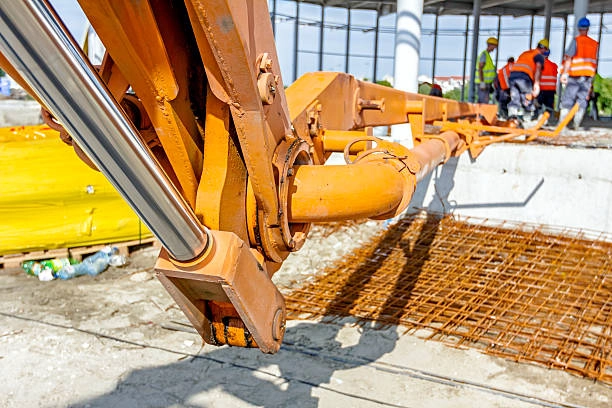
Hydraulic cylinders are the muscle behind countless machines — from construction excavators to industrial presses. They change hydraulic energy into mechanical force. This allows controlled motion and great power in small spaces. Knowing their structure is not just for engineers. It helps people understand how many machines work well each day.
What is a Hydraulic Cylinder?
A hydraulic cylinder is a mechanical actuator. It uses pressurized hydraulic fluid to create linear motion and force. The device is basically simple. Fluid goes into one side. Pressure builds up. Then the piston moves. It pushes or pulls with strong force.
In a single acting hydraulic cylinder, pressure works in one direction only. This usually extends the piston. The return movement comes from an outside force. Such as gravity or a spring. These cylinders fit well for tasks like lifting platforms or dump trailers. There, the load itself aids in pulling back the cylinder.
Key Components of a Hydraulic Cylinder
Each part of a hydraulic cylinder adds to its strength, accuracy, and dependability. Let’s examine the seven main components. They form this vital piece of equipment.
The Hydraulic Cylinder Barrel
The barrel makes up the primary body of the cylinder. It serves as the pressure container that holds hydraulic fluid while running. The barrel must handle high inside pressures. It should not bend or twist.
Common materials include:
| Material | Characteristics | Typical Use |
| Steel | High strength, durable under pressure | Heavy-duty industrial cylinders |
| Stainless steel | Corrosion-resistant | Marine or food-grade environments |
| Aluminum | Lightweight but less strong | Mobile or light machinery |
A finely made barrel provides even piston movement. It cuts down on friction losses. This boosts efficiency and lengthens working life.
The Cylinder Head (End Cap)
The cylinder head, also called the end cap, closes one end of the barrel. It seals the pressure area. The head stops fluid from leaking out. It also guides the piston rod during its stroke.
Design types vary by mounting method. Threaded heads allow simple upkeep. Welded heads provide lasting seals in high-pressure setups. Good alignment between head and rod is key. Even small misalignment can lead to early wear.
The Hydraulic Cylinder Base or Gland
The base (sometimes known as the gland) sits at the other end from the head. It holds seals and bearings. These keep hydraulic fluid in. They also let the rod move smoothly outward.
Choosing the right material here is important. Bronze glands lower friction. Hardened steel glands give toughness under big loads. In places with dust, protective wipers often fit into the gland. They block dirt from getting in with each stroke.
The Piston
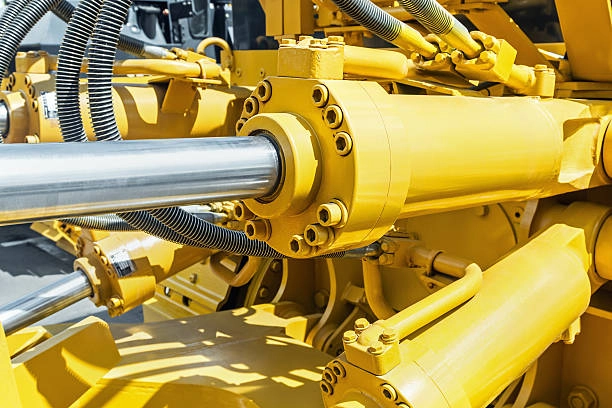
At the center of every hydraulic cylinder is the piston. It splits the inside chamber into two parts. The piston turns fluid energy into mechanical motion. When hydraulic fluid enters one side, it presses against the piston surface. This creates linear force. The force matches the pressure and size.
Piston design impacts how well it works. Larger diameter pistons make more force. Grooved pistons hold seals better. Exact machining stops small leaks between chambers.
If designed right, pistons keep steady motion. They do this even with changing loads or temperatures.
The Piston Rod
The piston rod links the piston to outside machines. It sends the created force to do tasks. Like lifting or pushing. Since it faces weather and bending stress, picking the material counts a lot.
Usual materials are chrome-plated steel for rust resistance and hardness. Or stainless steel for sea uses where stopping rust matters most. The surface finish affects seal life. Smoother rods cut down wear a lot.
The Seal Gland
The seal gland keeps different seals in place. It does this in both the head and base areas of the cylinder setup. Its job is to hold internal pressure tight. It also stops leaks around parts that move.
There are two chief types. Threaded glands come out easily for upkeep. Bolted glands go in bigger cylinders. They need stronger sealing power.
A good seal gland design cuts downtime. It does so by making checks and swaps simpler during service times.
Seals
Seals are tiny but vital parts. They make sure no hydraulic fluid slips from high-pressure spots. They also block dirt from getting in. Without good seals, even fine barrels or rods lose power fast.
Common seal types include:
- Piston seals, which divide high- and low-pressure sides.
- Rod seals, stopping leaks along moving rods.
- Wiper seals, keeping dirt out when rods pull back.
- O-rings, giving basic but good static sealing.
Selecting the right materials like polyurethane or nitrile rubber depends on working heat, fluid kind, and setting.
Additional Considerations in Hydraulic Cylinders
Even strong systems need attention to stay effective over time. Regular checks spot problems early. Before they grow big.
- Look at seals often for wear or stiffening.
- Check rod surfaces for pits or rust.
- Watch oil cleanness. Dirt shortens part life a lot.
- Confirm mounting straightness. To avoid side pressure on rods.
Usual wear signs are slow movement, oil drips near joints, uneven speed in extending, or loud bangs while working. These all show inside parts might need fix or swap soon.
Conclusion
Hydraulic cylinders look plain on the outside. But they use exact building inside each part. A single acting hydraulic cylinder depends on these parts. They must work together well under pressure many times a day. Without breaking. Shining Hydraulic focuses on building and making dependable hydraulic cylinders. These fit various factory needs. They ensure lasting strength, rightness, and simple care for all gear types that use better hydraulic tech. Contact us today to discuss your hydraulic cylinder requirements and experience the difference of top-tier engineering and service.
FAQs
Q: What does a single acting hydraulic cylinder do?
It uses pressurized fluid to move in one direction while returning by gravity or an external force.
Q: How often should I replace seals in a hydraulic cylinder?
Typically after 2–3 years of regular use or whenever leakage appears during inspection.
Q: What material is best for piston rods?
Chrome-plated steel offers excellent durability; stainless steel suits corrosive environments better.
Q: Why does my cylinder move unevenly?
Air trapped inside or worn seals can cause inconsistent motion during extension or retraction.
Q: Can I repair a damaged barrel instead of replacing it?
Minor scratches can be honed out; however deep scoring usually requires full barrel replacement for safety reasons.


