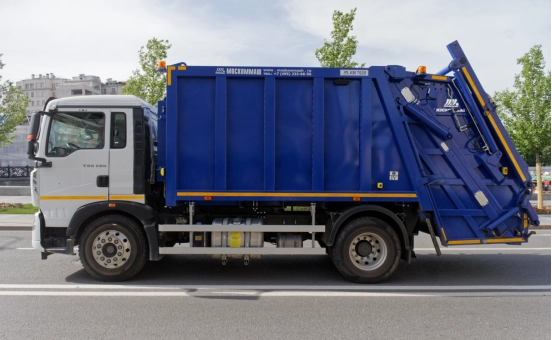
A dump body can look nearly level and barely move, yet its cylinder may be working hardest right there. Dump trailer hydraulic cylinder force depends on leverage as well as weight. At the start, a shallow cylinder angle can leave very little leverage to lift a heavy bed.
For a trailer designer, the awkward moment may come before the load has risen more than a few inches.
Why Does Lift Angle Change Dump Trailer Cylinder Force?
Picture the body sitting on its rear hinge. The payload tries to rotate it down; the cylinder has to turn it up. What counts is the perpendicular distance from the hinge to each force’s line of action. Measuring the bed alone won’t give you that distance.
With the bed down, much of the cylinder’s push can be directed along the chassis. Only a small part helps turn the body upward. Imagine pushing a door close to its hinge. You can push hard and achieve surprisingly little. A shallow-mounted tipping cylinder faces a similar disadvantage. As the bed rises, the cylinder may gain a longer effective arm while the weight acts through a shorter one. Loose material sliding inside the body can change the picture again.
Copying a bore from another trailer feels reasonable when both carry 12 tonnes. I’d still want the two side views next to each other. Matching payloads tell us nothing about whether the cylinders get matching leverage.
How Do You Calculate Hydraulic Cylinder Force During a Tip?
For one cylinder pushing directly on the body, a static estimate balances the moments around the hinge:
Cylinder force = (moving weight × horizontal load arm) ÷ effective cylinder moment arm
The load arm runs horizontally from the hinge to the combined center of gravity. Measure the cylinder arm perpendicularly to its centerline. A scissor hoist needs its linkage included in the calculation.
A 12-Tonne Body and Load at Rest
For a worked example, imagine a loaded body with a total moving mass of 12,000 kg. That includes the bed itself, an easy weight to leave out when starting from payload capacity. Gravity converts those 12 tonnes to a downward force of 117.7 kN. A horizontal distance of 1.8 m between the hinge and combined load center gives roughly 212 kN·m of turning moment.
Suppose there are two cylinders with matching geometry. Each gets just 0.35 m of leverage at startup. Splitting the moment equally gives 212 ÷ (2 × 0.35), or 303 kN per cylinder. Quite a jump from the weight being lifted. And that’s only equilibrium; the calculation hasn’t paid for friction or acceleration.
The Same Load Farther into the Lift
Farther up, imagine measuring 0.85 m for the cylinder arm and 1.5 m for the horizontal load arm. Run the numbers again: 117.7 × 1.5 ÷ (2 × 0.85) gives 104 kN per cylinder. Nothing has been unloaded. Yet each cylinder needs only about a third of its starting force. A calculation made only with the bed raised would miss that expensive difference.
What would 303 kN mean for the bore? With 21 MPa available at the piston, force divided by pressure gives about 14,400 mm² of area. A circular piston of that area is roughly 136 mm across. This extension calculation leaves out return-side pressure. There is no working margin in it yet.
How Should Cylinder Bore and Mounting Be Chosen?
Bore gets most of the attention. On a drawing, though, I would give the space around the cylinder just as much scrutiny. All that calculated thrust must pass through real pins and brackets.
Leave Room for the Moving Cylinder
Swing the assembly through its travel. Watch the barrel pass the nearest crossmember; watch the rod approach full extension. A layout can fit at both ends and still foul the frame halfway up.
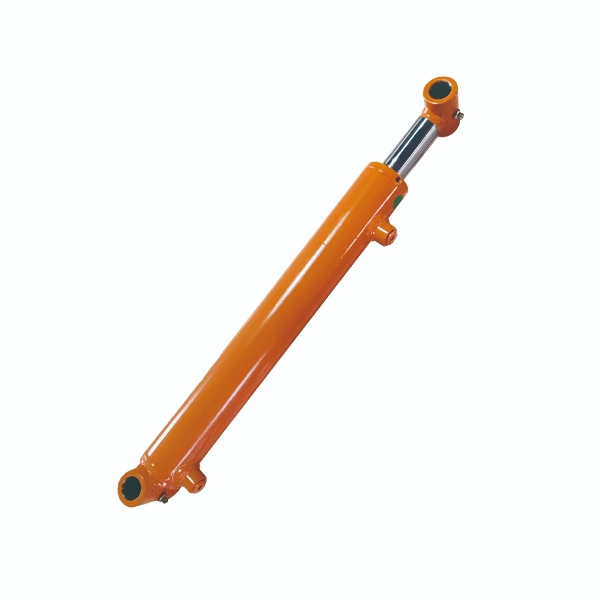
The attraction of welded hydraulic cylinders here is their compact form. Still, leave room around the barrel. Moving a pin to gain leverage is no bargain if the cylinder then touches the bed.
Give the Rod and Mounts Their Own Calculation
Bore and rod diameter answer different questions. The bore supplies force; a slender rod under compression can still buckle. Its unsupported length matters, as does the way its ends are held. The pins carry the cylinder’s full thrust, which can be much greater than the load’s weight. This moving-leverage problem also appears in loader lift cylinders.
What Tipping Trailer Cylinder Trade-Offs Matter Beyond Force?
It is tempting to solve a high force number by going up a bore size. That buys area, but the bigger piston also asks for more oil. Keep pump flow and stroke constant and the tip cycle gets longer.
The tempting bargain is a smaller bore at higher pressure. Before taking it, look at the relief setting. If the valve opens before that higher pressure is reached, the smaller cylinder never produces the force you calculated.
I’d settle that question before spending money on a larger pump. Extra flow chiefly buys speed once enough force is available to move the load. When sizing truck-mounted crane platform cylinders, separate those two demands in the same way.
Where Should a Dump Trailer Cylinder Design Begin?
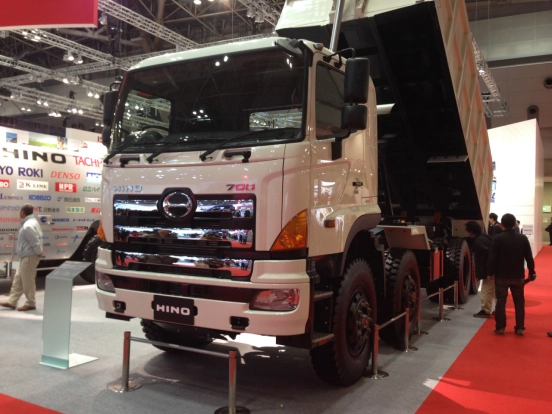
Begin where the bed leaves the chassis. In the example above, that small movement demanded nearly three times the force needed later. It deserves more attention than the impressive photograph of a fully tipped body.
If you’re weighing two mounting layouts, bring them to our engineering support team. Or send us your body drawing with the load position marked. We can start the discussion at the hinge and pins, where the force requirement actually comes from.
FAQ
Is the Starting Lift Always the Hardest Part?
Not necessarily. A shallow starting angle makes it a strong candidate. Material caught toward the front of a raised bed can keep the load arm longer than expected, though. The peak belongs to a particular layout and load case.
Does a Larger Bore Fix a Weak Tipping Design?
It buys more push, provided pressure is available. It may also buy a slower tip cycle. A few extra seconds per tip matter little for occasional unloading. Repeated all day, they become a reason to revisit the mounting geometry.
Can One Cylinder Specification Fit Every Dump Body?
No. Change the hinge, body length, payload position, pin coordinates or target angle and the curve changes with them. “Same payload” is not the same lift problem.
Do Twin Cylinders Always Split the Load Equally?
Only in the simplified calculation above. Put more material on one side and the two mounts can see different loads. Frame twist and the hydraulic arrangement affect sharing too; dividing by two is an assumption to justify.