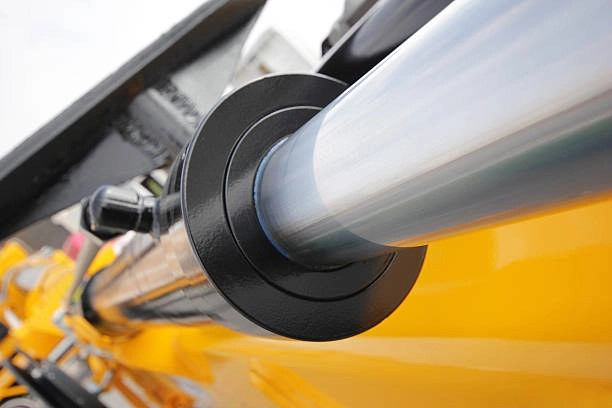
For a mobile machine, hydraulic cylinder port size is a flow-path decision—not simply a thread-size choice. Start with the flow required to achieve the target cylinder speed, then check oil velocity, pressure loss, port standard, hose routing and the available installation envelope. The best nominal port is the one that keeps the complete connection path compatible with the machine, not automatically the largest port that fits.
What Does Hydraulic Cylinder Port Size Control?
Port size affects how easily oil enters and leaves the cylinder. It influences the effective flow area, local velocity, pressure loss and the fittings that can be installed without compromising the machine envelope. It also fixes practical details such as thread or flange standard, port orientation and hose bend space.
Do not confuse the nominal port designation with the actual passage area. A fitting, elbow, quick connector or internal drilling can be more restrictive than the cylinder port itself. For that reason, specify the cylinder port as part of the whole circuit: pump and valve flow, hose size, fitting standard, operating pressure and the cylinder’s cap-end and rod-end requirements.
How Do You Match Port Size to Flow Rate?
Use the flow-area relationship as a first-pass check:
Q = v × A
Where Q is flow, v is average oil velocity and A is the effective flow area. In practice, convert units before calculating. If a circuit delivers 40 L/min, that is 0.000667 m³/s. A designer who sets an illustrative target velocity of 4 m/s would need approximately 167 mm² of effective area before accounting for fittings, entry losses and manufacturing tolerances.
This is a screening calculation, not a final port callout. Check both directions on a double-acting cylinder. Cap-end flow uses the full bore area; rod-side flow uses the annular area after subtracting the rod area. The two flows can therefore differ even when the pump setting is unchanged. Then compare the calculated area with available port, fitting and hose passages. A nominal size that looks adequate on paper may become restrictive after a sharp elbow or reduced-bore adapter is added.
Which Port Dimensions Must Original Equipment Teams Specify?
Put more than a nominal size on the drawing. A supplier should be able to identify the mating component without guessing. Include:
- nominal port size and the effective connection standard;
- thread, flange or other interface designation, including sealing method;
- port orientation, clocking angle and any allowable orientation tolerance;
- usable thread depth or flange envelope and the adjacent clearance zone;
- the hose or tube approach direction and minimum bend space;
- pressure, temperature and fluid compatibility requirements; and
- cleanliness or plugging requirements for shipment and assembly.
For example, Shining Hydraulic lists SAE porting availability for selected 5-, 6- and 8-inch-bore welded cylinders. That does not mean every application should use the same port; it shows why the interface standard must be named explicitly. A clear drawing can reference a welded cylinder with SAE porting while still defining the exact orientation and mating hardware for the machine.
How Does Port Size Affect Cylinder Speed and Pressure Loss?
Cylinder speed is primarily set by flow divided by effective piston area, but port restrictions determine how much of the available flow reaches the actuator without excessive pressure drop. A smaller passage can increase local velocity and create a larger loss across fittings, valves and transitions. That loss consumes pressure margin and can turn into heat. A larger port reduces restriction only when the upstream valve, hose and pump can supply the additional flow.
| Porting choice | Likely benefit | Main risk |
| Undersized for the required flow | Compact packaging and lower initial hardware cost | Higher velocity, pressure loss and heat |
| Matched to the complete flow path | Balanced speed, packaging and pressure margin | Requires coordinated drawing and hose selection |
| Oversized without system review | More passage area | Extra cost, bulk and no benefit if the valve or hose remains restrictive |
Treat the table as a decision framework, not a universal velocity limit. Final limits depend on fluid, duty cycle, temperature, pressure and the manufacturer’s design data.
What Porting Choices Fit Mobile Equipment?
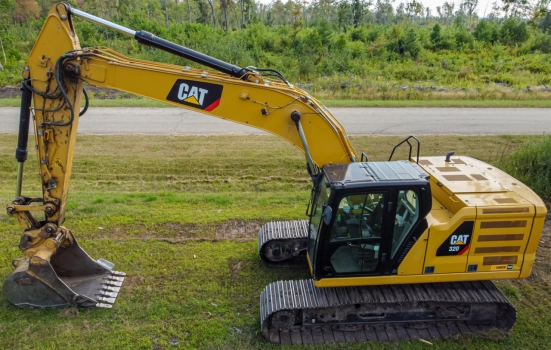
Mobile equipment adds movement and packaging constraints. On a loader or excavator, the hose may articulate around a pin, pass near a linkage or face impact from material and debris. Port orientation can matter as much as nominal size because a technically adequate fitting may still foul the frame or force a tight bend.
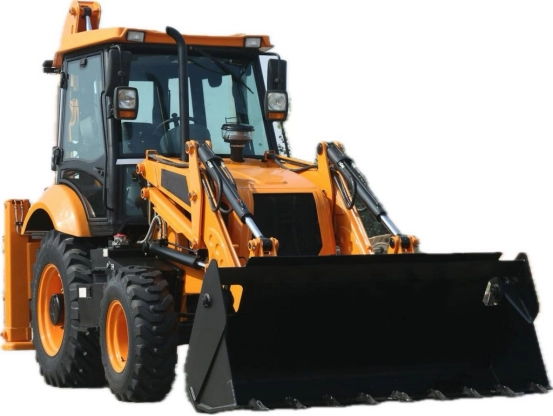
Review the full stroke envelope, pin movement, hose guard space and assembly sequence. Standardizing a port family across a machine platform can simplify procurement, but only if the common fittings still meet the highest flow and pressure requirement. For a loader application, compare the circuit’s required flow and envelope with the loader hydraulic cylinder application rather than copying a port from a visually similar machine.
What Common Port-Selection Mistakes Should Buyers Avoid?
Before releasing a drawing, check five common errors:
- Matching thread outside diameter while ignoring effective flow area.
- Checking cap-end flow but not rod-side annular-area flow.
- Omitting port orientation, clearance or hose bend requirements.
- Treating hose nominal size and cylinder port nominal size as interchangeable labels.
- Naming a fitting without stating the mating thread, flange or sealing standard.
The hose assembly is part of the restriction path, so coordinate the cylinder interface with the hydraulic hose assembly specification. If a reducer is unavoidable, include it in the pressure-loss review instead of hiding it in the purchase description.
FAQ
The following questions cover practical edge cases that often appear during OEM design reviews.
Can a Larger Hydraulic Cylinder Port Improve Speed?
A larger port can reduce restriction when the existing port, fitting or hose is limiting flow. It cannot create pump flow or make an undersized directional valve deliver more oil. Check the complete path before increasing the cylinder connection.
Should Port Size Match the Hose Size Exactly?
Not always. The port, fitting and hose must form a compatible, pressure-rated flow path, but different standards use different nominal references. Compare effective passage, mating geometry and bend requirements rather than matching labels alone.
Do SAE Port Standards Determine the Port Bore?
An SAE designation identifies an interface family and its dimensional rules. The resulting flow area still depends on the specific port, fitting, passage and any internal transition. Record the exact standard and size on the drawing.
Does Rod-Side Flow Change the Port Selection?
Yes. During retraction, flow is related to annular area, which is smaller than the full piston area. Calculate both cap-end and rod-side cases for a double-acting cylinder, then check the direction that creates the highest velocity or restriction.
What Should You Send for a Porting Review?
Prepare a drawing or interface sketch with bore, stroke, rod diameter, required flow, working pressure, target speed, port standard, port orientation, mounting details, hose approach, temperature and duty context. Also identify any space limits around pins, guards or adjacent structure. With those inputs, you can send your cylinder drawing and flow data for a focused porting review. The goal is a complete, buildable interface specification—not a nominal size selected in isolation.