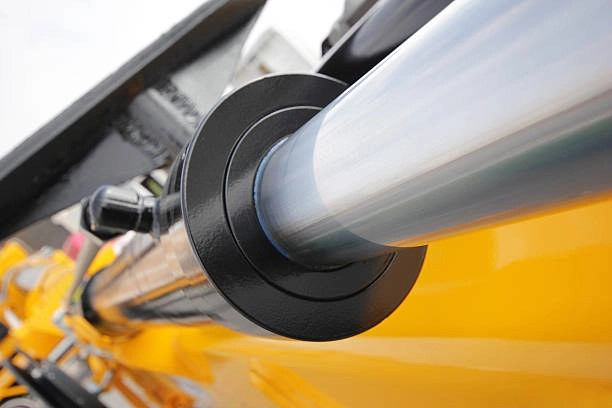
When a hydraulic cylinder reaches the end of its stroke, the remaining moving energy has to go somewhere. If the piston, attached linkage, or carried load arrives too quickly, the result can be impact, pressure spikes, vibration, noise, or structural loading. Hydraulic cylinder cushioning creates a controlled restriction during the final part of travel so the actuator decelerates before the mechanical stop. It is not automatically required for every cylinder: the right decision depends on speed, moving mass, cycle behavior, linkage stiffness, and the required end position.
What Does Hydraulic Cylinder Cushioning Control?
End of stroke cushioning controls the final approach of a piston to the cap or head end. A cushion sleeve, spear, or similar geometry progressively closes a passage, forcing fluid through a restricted path and converting part of the moving energy into a controlled pressure drop. The objective is a smoother stop, not simply a slower cylinder over its entire stroke.
A directional valve or flow control valve sets overall extension or retraction speed; a cylinder cushion acts only near the selected stroke end. It cannot compensate for an incorrectly sized bore, an unstable valve, a rigid external stop, or severe side load. Those conditions belong in the complete hydraulic and mechanical design.
When Does an OEM Need Hydraulic Cylinder Cushioning?
The strongest reason to specify cushioning is high kinetic energy at the end of travel. A useful estimate is:
E = 1/2 × m × v²
where E is kinetic energy, m is the moving mass reflected at the cylinder, and v is approach velocity. This is an illustrative relationship, not a field guarantee. Because velocity is squared, doubling approach speed increases the stopping energy term four times when mass is unchanged.
An OEM should examine cushioning closely when several of these conditions occur together:
| Condition | Why It Raises the Cushioning Requirement |
| High approach speed | More energy must be dissipated in a short distance. |
| Large reflected mass | The cylinder is stopping a boom, bucket, platform, or other moving assembly. |
| Frequent end of stroke cycles | Repeated impact can influence noise, structural loads, and operator feel. |
| Rigid linkage or frame | Less compliance is available to absorb the final motion. |
| Tight final position behavior | The machine needs a repeatable stop rather than a hard mechanical hit. |
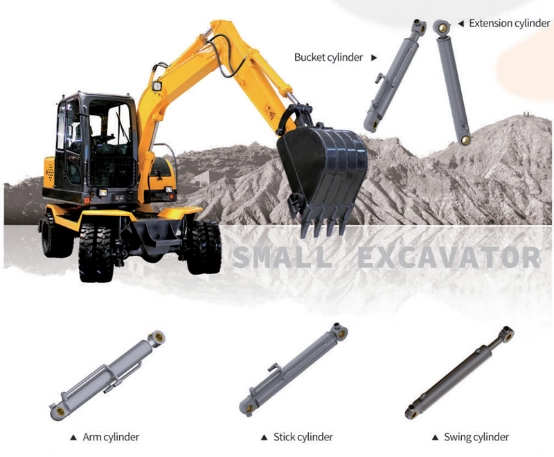
For example, boom and bucket motions on excavator hydraulic cylinders can produce different end loads as linkage geometry and working position change. Cylinder diameter alone does not decide the requirement; reflected mass and approach velocity at the stop do.
How Should Hydraulic Cylinder Cushioning Be Specified?
A usable specification describes the motion that the cushion must control, not only the words “with cushion.” Start by identifying the cushion direction: cap end, rod end, or both. Then record the cushion length, nominal stroke, retracted and extended mounting dimensions, pin geometry, and the point at which the restriction begins.
Record approach speed at the cushion, actuator pressure, available flow, load direction, and worst case linkage position. If speeds or loads vary by mode, state each mode; a light empty attachment may behave differently from a full payload.
Also define the adjustment concept. A fixed orifice may suit stable, repeatable motion. An adjustable needle or cartridge can help when load, temperature, or operating modes vary, but it introduces a setting that must be protected and documented. Confirm how the cushion interacts with counterbalance valves, meter out control, regeneration, and any external mechanical stop.
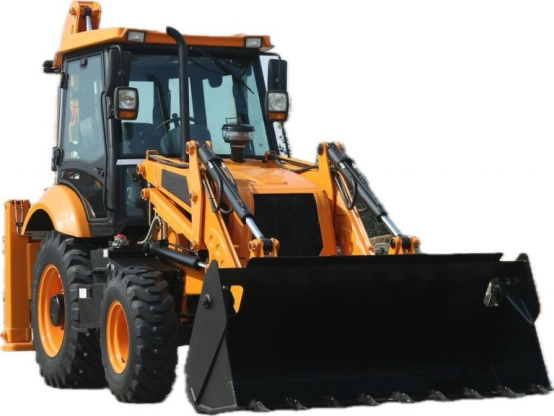
Packaging is part of the design. The adjustment screw, port orientation, rod end mount, and guards must remain clear through complete articulation. Loader hydraulic cylinders illustrate the issue: the linkage may require a compact envelope even when a substantial assembly reaches the stop. Shining Hydraulic’s application and engineering support can be included before interfaces are frozen.
What Trade Offs Affect Adjustable Cylinder Cushioning?
More restriction is not automatically better. Too little may leave a sharp impact; too much can create a pressure spike, slow the cycle, or prevent full stroke at low pressure. The target is controlled deceleration within the cushion length and system pressure envelope.
Adjustability is valuable when the machine has changing loads, multiple operating modes, or a commissioning phase in which the real motion must be tuned. It is less attractive when the setting could be changed accidentally, when access is limited, or when the motion is highly repeatable and a fixed design can be validated. Bidirectional applications need separate attention to the two end conditions; one end may see a very different load path from the other.
A cushion is also not a substitute for a correctly designed mechanical stop. The stop, linkage, cushion geometry, valve behavior, and structural stiffness should be treated as one motion control problem. If the stop itself must absorb most of the energy, the cylinder cushion is being asked to solve the wrong part of the system.
Which Applications Commonly Benefit from Hydraulic Cylinder Cushioning?
The decision deserves early review on excavators, loaders, aerial work platforms, scissor lifts, truck mounted cranes, material handling equipment, industrial positioning systems, and agricultural machines with rapid implement motion. For instance, scissor lift hydraulic cylinders may need a different end of stroke response from a loader cylinder because platform motion, operator comfort, and structural geometry are different.
The equipment category is only a starting point. Machines in the same industry can need different behavior because stroke, valve configuration, load distribution, or end stop geometry differs. Evaluate the motion profile and required stop quality before selecting fixed or adjustable cushioning.
FAQ
These questions address common decisions after the cushioning requirement is understood.
Is Hydraulic Cylinder Cushioning the Same As Flow Control?
No. Flow control sets actuator speed through a broader part of the stroke. Cushioning restricts flow during the final approach to a selected end, so the cylinder can decelerate before impact. Both can be needed, but they solve different motion problems.
Do All Heavy Duty Hydraulic Cylinders Need Cushioning?
No. Cylinder size is only one factor. Approach speed, reflected mass, cycle frequency, linkage stiffness, pressure margin, and the consequences of a hard stop determine whether cushioning is justified.
Is Adjustable Cushioning Always Better Than Fixed Cushioning?
No. Adjustment helps when load or operating conditions vary. A fixed cushion can be preferable for stable, repeatable motion because it removes an unintended setting change and simplifies design control.
What Data Should an OEM Provide for a Cushioning Review?
Provide bore, rod diameter, stroke, mounting dimensions, pressure, flow, approach speed, load direction, cycle conditions, linkage geometry, fluid and temperature range, external stops, and the desired end of stroke behavior.
How Should an OEM Request a Cushioning Review?
Prepare the cylinder drawing or interface dimensions with the motion data that defines the end event. Include moving mass or load, approach velocity, pressure and flow limits, cushion direction, mounting geometry, circuit schematic, external stops, operating modes, and acceptable final position behavior. If load cases differ, identify the highest reflected energy and most restrictive pressure condition.
Then send the application details for a focused technical discussion. A clear package lets cylinder design, cushion geometry, valve arrangement, and linkage be reviewed as one system. The result may be fixed cushioning, adjustable cushioning, or another motion control approach—based on the actual envelope and operating conditions rather than cylinder size alone.