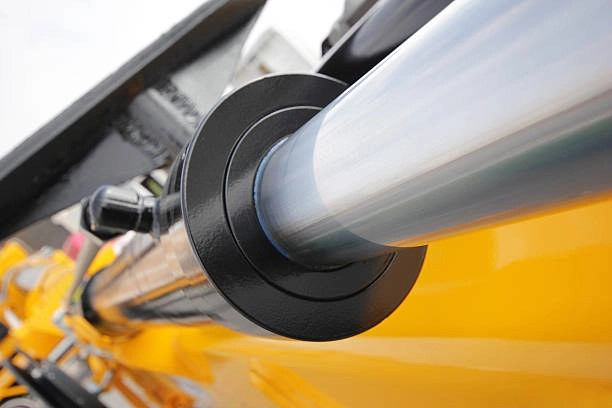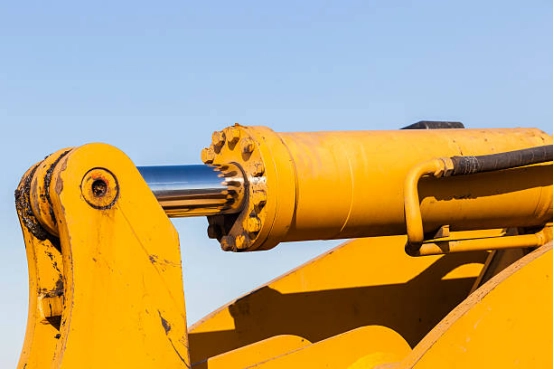
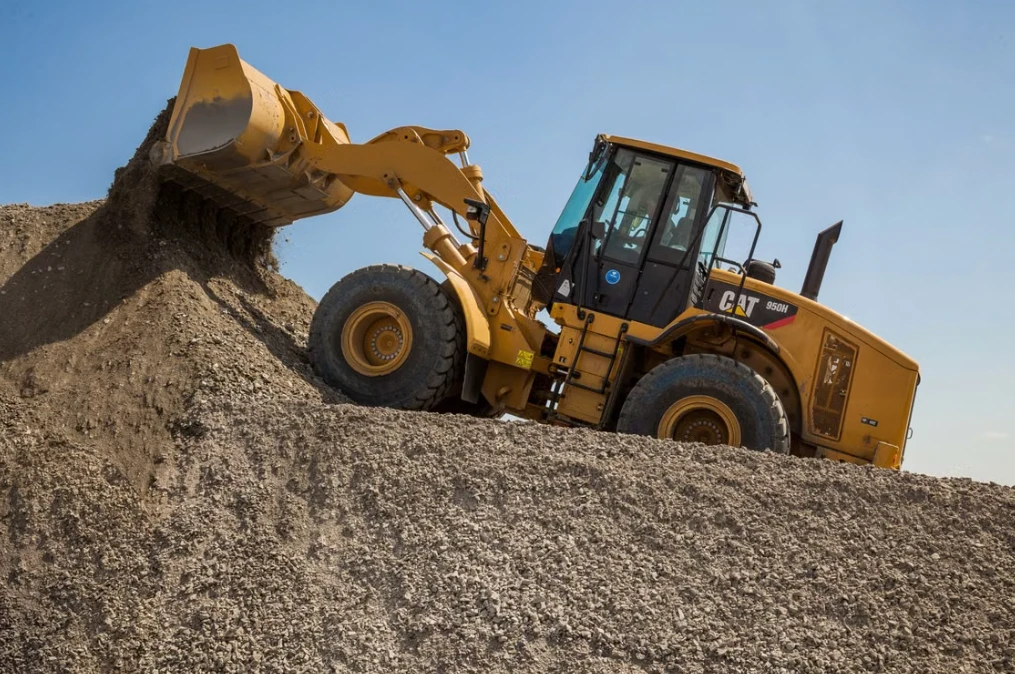
Wheel loaders subject hydraulic cylinders to severe daily tasks. Machines dig, raise, and move heavy materials across uneven terrain. This constant action causes sudden pressure jumps. It also leads to side loading, dirt exposure, and high temperatures. Therefore, picking the proper cylinder requires more than just checking the bore and stroke sizes.
Lift and tilt cylinders perform distinct jobs on the machine. Finding the ideal fit relies on understanding the required power and physical layout. It also depends on the rod durability, seal types, and the specific working environment.
What Hydraulic Cylinders Are Used on a Wheel Loader?
Lift and tilt cylinders are the main working cylinders around the loader linkage. Both must fit the machine correctly, but their mechanical demands are different.
Lift Cylinders
Lift cylinders, sometimes called boom cylinders, raise and lower the loader arms. They carry the combined effect of the boom, bucket, attachment, and payload.
The load changes with boom angle, and digging into dense material adds short shock loads. For a wheel loader lift cylinder, bore size, rod diameter, stroke, mounting strength, and pressure rating deserve close attention. Long rods in compression also need enough resistance to buckling.
Tilt Cylinders
Tilt cylinders control bucket rollback, digging angle, and dumping movement. They often cycle more frequently than lift cylinders.
Stroke accuracy matters. A tilt cylinder that is slightly too long or too short can change bucket angle at full rollback or dump, even when it fits between the pins.
| Cylinder | Main Function | Key Selection Focus |
| Lift Cylinder | Raise and lower loader arms | Force, bore, rod strength, stroke |
| Tilt Cylinder | Control bucket angle | Stroke, mounting, cushioning |
Lift Cylinder vs. Tilt Cylinder: What Is the Difference?
The main difference is load path.
Lift cylinders provide the force needed to move the boom and payload. Tilt cylinders control bucket rotation through the linkage. Lift cylinders are more sensitive to lifting force, rod compression, and structural margin. Tilt cylinders are more sensitive to exact travel and mounting geometry.
Worn pins, side loading, and contamination can damage either cylinder. A replacement should never be selected by appearance alone. Bore, rod diameter, stroke, retracted length, pin size, mounting width, pressure rating, and port position all matter.
How to Select Hydraulic Cylinders for Wheel Loaders
Good selection usually comes from combining machine data with physical cylinder measurements. Relying on only one source leaves room for error.
1. Determine Required Force and Operating Pressure
Cylinder force is determined by piston area and hydraulic pressure. Use the machine’s actual working pressure rather than an assumed value based on loader size.
Peak loads matter as well. Digging into compacted soil or broken rock can create pressure spikes above normal lifting pressure. Modified buckets, attachments, pumps, or relief settings should also be considered.
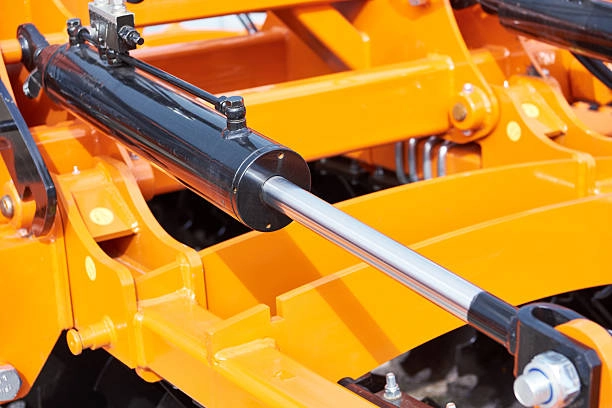
2. Check Bore and Piston Rod Diameter
Bore diameter determines available pushing force. Rod diameter affects strength, stability, retract force, and resistance to deflection.
A larger rod is not automatically better because it also changes retract force and speed. On lift cylinders, repeated guide wear or scoring near the gland may point to rod deflection or alignment problems rather than a simple seal failure.
3. Match the Correct Stroke Length
Stroke determines how far the linkage can move.
For a lift cylinder, it controls boom travel. For a tilt cylinder, it affects bucket rollback and dumping angle.
An overlong tilt cylinder may force the linkage against a mechanical stop, transferring impact into pins, brackets, and weldments. Compare stroke with both the old cylinder and the machine linkage.
4. Verify Mounting and Pin Dimensions
Mounting errors are common in replacement work.
Check pin diameter, mounting width, center to center length, retracted and extended length, clevis or eye dimensions, bushings, and mounting orientation.
The cylinder should sit naturally between the brackets. If the pins have to be forced into place, something is wrong.
For a hydraulic cylinder for loader replacement, bore and stroke alone are not enough.
5. Consider Seals and Operating Environment
Wheel loaders work in dirt. Dust, mud, quarry slurry, and road salt all reach the cylinder rod. Wiper design matters because contamination entering the gland damages seals and the rod surface. Temperature also changes seal behavior.
For severe service, seal material and wiper design should be application choices, not generic catalog items.
6. Evaluate Rod Surface and Corrosion Protection
Rod surface condition has a direct effect on seal life.
Chrome plated rods are common, but machines used around salt, fertilizer, ports, or corrosive materials may need stronger protection. Nickel chrome systems, QPQ treatment, or other surface options can be considered when standard chrome is unlikely to last.
Even small corrosion pits can quickly damage new seals as the rod cycles through the gland.
7. Check Cushioning and Hydraulic Port Configuration
End of stroke impact is easy to feel on a wheel loader, and the linkage absorbs it.
Cushioning can reduce that shock when correctly matched to cylinder speed and load. Port layout also needs checking. A mechanically correct cylinder can still be unsuitable if a port interferes with the frame or forces a hose into a sharp bend.
Confirm fitting type, port position, hose routing, and expected flow before production.
Replacement Wheel Loader Cylinder: What Measurements Do You Need?
A useful replacement request should include more than a machine model and a photo.
Provide:
- Wheel loader make and model
- Cylinder function: lift or tilt
- Bore diameter
- Rod diameter
- Stroke
- Retracted and extended length
- Pin diameter
- Mounting width and style
- Hydraulic port size and orientation
- Working pressure
- Operating temperature
- OEM part number, drawing, or clear photos
Measurements from a badly worn cylinder need some judgment. Oval pin holes, bent rods, and worn bushings can introduce enough error to create installation problems later.
Why Choose Custom Hydraulic Cylinders for Wheel Loaders?
Standard replacement cylinders function well if you know the exact factory details. However, older loaders sometimes rely on parts that are no longer available. Meanwhile, specialized sectors like mining, port handling, recycling, and freezing environments face unique challenges. These specific fields might require altered measurements or upgraded seals. They could also need special rod coatings or stronger structural limits.
Shining Hydraulic builds hydraulic cylinders for construction machinery. This includes wheel loader uses. Options cover strong structures, forged parts, seal setups, rod surface treatments, cushioning, and sizes matched to the job. For custom orders, a drawing together with actual working conditions helps more than a long description.
FAQs About Wheel Loader Hydraulic Cylinders
Q: What is the difference between a lift cylinder and a tilt cylinder on a wheel loader?
A lift cylinder raises and lowers the loader arms. A tilt cylinder controls bucket rotation.
Q: How do I know what size hydraulic cylinder my wheel loader needs?
Check bore, rod diameter, stroke, mounting dimensions, operating pressure, and required force.
Q: Can a wheel loader hydraulic cylinder be customized?
Yes. Bore, rod size, stroke, mounting ends, ports, seals, rod surface treatment, cushioning, and materials can be adapted to the application.
Q: What information is needed to replace a wheel loader cylinder?
Provide the loader model, cylinder function, bore, rod diameter, stroke, pin dimensions, retracted and extended length, port details, pressure, and operating conditions.
Conclusion
A reliable wheel loader hydraulic cylinder starts with correct dimensions and realistic operating data. Lift cylinders need enough force and rod strength. Tilt cylinders need accurate geometry and travel. Both depend on proper alignment, suitable seals, durable rod surfaces, and correct hydraulic connections.
Need a replacement or custom hydraulic cylinder for a wheel loader?
Contact Shining Hydraulic with your cylinder drawing, loader model or required specifications to discuss a suitable lift or tilt cylinder solution.