Underground mining equipment works in a place that is hard on every component. Rock dust gets into joints. Water finds its way past guards. Loads change without warning. A hydraulic cylinder that performs well in a clean factory can struggle below ground.
The cylinder may advance a roadheader or position a drill boom. It may also set a support leg. When it leaks or bends, the machine can sit idle in a tunnel where access is limited. The design has to fit the machine and mine—not just a catalog pressure rating.
The Operating Challenges of Underground Mining Equipment
The working conditions explain why mining cylinders need a different design approach.
High Loads and Repeated Shock
A mining cylinder rarely sees a smooth laboratory load. A roadheader can meet a hard seam and transfer shock through the boom. A drill truck may carry a side load while the operator adjusts the arm.
Those events stress the rod and piston. They also load the welds and mounts. Sizing for average force leaves little margin. Dynamic loads and buckling risk deserve attention when the cylinder is extended.
Dust, Water and Contamination
Fine dust acts like abrasive paste on a rod seal. Water can sit around the gland and start corrosion. Once the rod surface is damaged, a new seal may not last long.
Mining service calls for seals suited to contamination. Wipers, guide rings and rod coatings have to work together. Hydraulic oil cleanliness matters too.
Limited Space and Difficult Maintenance
An underground machine may have only a narrow opening for a cylinder. Retracted length can matter as much as stroke. Port orientation may determine whether a hose rubs against the frame.
Maintenance crews need access to pins and fasteners. A strong cylinder becomes a practical problem if it cannot be removed safely. Set mounting details while the machine layout is still being developed.
Key Design Requirements for Mining Hydraulic Cylinders
Engineer the cylinder as part of the machine structure.
High-Strength Cylinder Construction
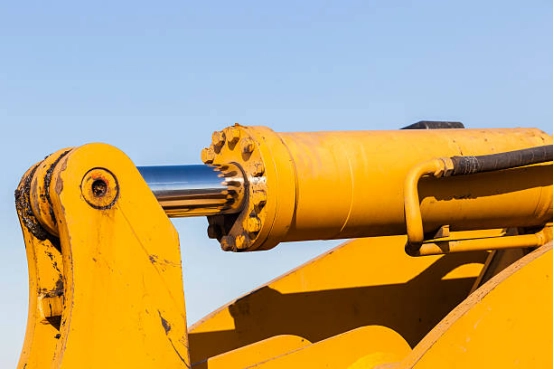
The barrel and piston rod share the load with the clevis, trunnion and welds. Wall thickness and rod diameter should reflect compression and side loading. Support conditions matter too. Welded construction is useful for specialized equipment because it offers a compact envelope and flexible mounting geometry.
Weld quality deserves close control. Distortion affects alignment, while poor penetration can create a weak point. Machining after welding restores critical bores and faces.
Reliable Sealing and Guidance
Seals must handle pressure, temperature and contamination without excessive friction. Guides keep the rod centered and limit metal-to-metal contact when a boom introduces lateral force.
End-of-stroke cushioning can reduce impact at full extension or retraction. On a fast mining attachment, it can keep repeated shock out of the frame.
Corrosion and Surface Protection
Rod protection should match the mine environment. Surface treatment depends on water exposure, cleaning chemicals and debris. The gland may need extra protection near the floor or cutting head.
Hydraulic Cylinder Types Used in Underground Mining Equipment
Different machines place different demands on the actuator. Function should guide the design before dimensions are fixed.
Cylinders for Roadheaders
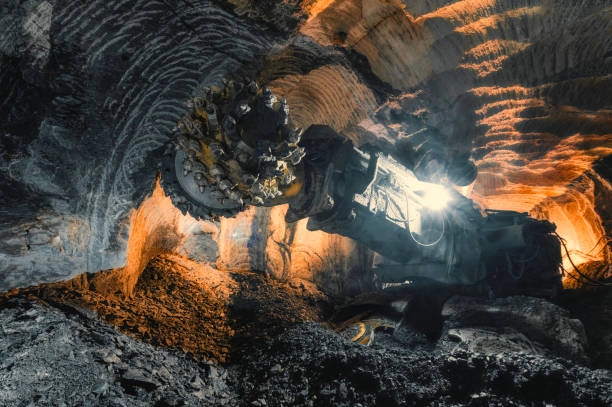
Roadheaders use cylinders to position the cutting head and control boom movement. The actuator must fit a compact structure while handling vibration and abrupt resistance. A purpose-built hydraulic cylinder for roadheaders can match the available pins and working envelope.
Cylinders for Rock Drill Trucks
Drill trucks rely on cylinders for boom positioning, leg deployment and angle adjustment. A cylinder may hold a boom steady while the drill vibrates several meters away. The mounting must tolerate changing angles without forcing side load on the rod. Shining Hydraulic lists hydraulic cylinders for rock drill trucks for this equipment.
Custom Welded Cylinders
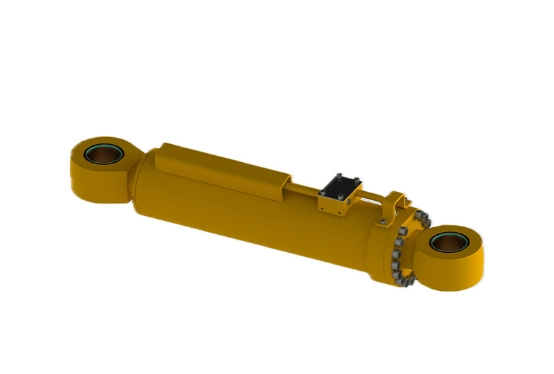
Standard dimensions do not always suit a mining machine. A custom welded cylinder can use a short retracted length, an unusual clevis or a particular port location. The welded hydraulic cylinder is a useful starting point for review.
How to Select the Right Heavy-Duty Mining Cylinder
Good selection starts with operating data rather than a model number.
- Define the load and duty cycle. Record push and pull forces. Include shock events and the number of cycles per shift.
- Calculate bore and rod diameter. Bore controls force at a given pressure. Rod diameter must also resist buckling and bending.
- Confirm stroke and retracted length. Check the full machine movement and the physical space available at both ends.
- Select mounting and port configuration. Confirm the pin or clevis style. Check flange details and hose access.
- Match seals and surface treatment to the environment. Note water and dust exposure. Record temperature and cleaning practices.
- Review testing and documentation. Pressure tests and dimensional records make troubleshooting easier. Traceability helps later.
What Makes a Mining Hydraulic Cylinder Reliable?
Reliability comes from the complete manufacturing chain. Material inspection matters. So do accurate machining, correct seal installation and a relevant pressure test.
Before shipment, check leakage, smooth travel, stroke and cushioning where specified. Drawings and inspection records help reproduce a component later. If a project requires a particular ISO process or certificate, confirm it during quotation.
Why Choose Shining Hydraulic for Underground Mining Applications?
Shining Hydraulic focuses on hydraulic cylinders and related products for machinery manufacturers. Its portfolio includes welded cylinders and application-oriented cylinders for roadheaders and rock drilling machines.
An engineering review is more productive with real installation data. Include stroke and pressure. Add mounting dimensions, port position and duty cycle. Note the conditions around the rod. A drawing is ideal. Photos of the cylinder and attachment points can expose problems a short specification misses.
Related components may need attention too. A correctly sized cylinder can suffer if a hose rubs against a guard or a fitting adds restriction. Shining Hydraulic also provides hydraulic hose assemblies and fittings.
Maintenance Practices to Extend Cylinder Service Life
Inspect the rod for scoring, rust and dents. Wipe contamination away before it retracts through the seal. Check pins and bushes for looseness or uneven wear; they can create side loading.
Keep hydraulic oil clean and investigate slow movement, drift or crawling early. A small seal leak found during a planned shutdown is easier to manage than a failed cylinder in a production tunnel.
Frequently Asked Questions
Q: Can hydraulic cylinders be customized for underground mining machines?
Yes. Bore and rod diameter can be matched to the equipment. So can stroke, mounting points, ports, seals and surface treatment.
Q: Are welded cylinders suitable for heavy-duty mining equipment?
They can be, when the structure, welds and mounting are engineered for the load, pressure and duty cycle. Application data should guide the final selection.
Q: What information should I provide for a quotation?
Share the equipment type and cylinder dimensions. Add operating pressure, mounting details and the working environment. Drawings or photos and expected quantity are useful.
Get a Custom Quote for Your Mining Hydraulic Cylinders
Underground equipment needs a cylinder designed for the actual machine. Send Shining Hydraulic a drawing or key dimensions for a roadheader, drill truck or another mining application. The team can review the load, space and environment and recommend a custom hydraulic cylinder solution.