Sizing a hydraulic cylinder is simple on paper. Trouble starts when a cylinder that looks correct in a spreadsheet is installed on a real machine. Loads shift. Pressure drops. Pin joints add side load.
A workable specification needs four parameters to agree: bore diameter, rod diameter, stroke length and working pressure. For OEM machinery, size from the load and operating conditions, then check geometry and structural limits before freezing the drawing.
Step 1: Determine the Required Hydraulic Cylinder Force
Cylinder sizing starts with the force the machine actually needs, not with a bore copied from a similar cylinder. A loader linkage, baler gate or scissor platform can generate very different cylinder loads even when machine weight looks similar.
Hydraulic Cylinder Force Formula
For extension force, the basic relationship is:
Force = Pressure × Piston Area
This is theoretical force. Real systems lose pressure through valves, hoses, fittings and flow restrictions, so the cylinder should not operate at the exact theoretical limit.
A practical design includes margin for friction, dynamic loading and pressure variation. A slow clamp may need less reserve than a mobile cylinder exposed to impact loads.
Retraction force is lower because the rod reduces effective area on the rod side. That matters when both directions perform useful work.
Step 2: Calculate the Required Cylinder Bore Size
Once the force target is known, the bore can be calculated. Bore diameter directly controls piston area and available force.
How Bore Diameter Affects Cylinder Force
A larger bore produces more force at the same pressure. It also needs more oil for every millimeter of travel, so cylinder speed may fall if pump flow stays unchanged.
The basic relationship is:
Required piston area = Required force ÷ Available pressure
The calculated area can then be converted into bore diameter. In production equipment, choosing the next practical bore size above the minimum is usually sensible.
Consider a compactor cylinder that meets the calculated force during normal loading but occasionally sees a jammed load. A bore with no reserve may pass testing and still feel weak in service. That is often a sizing issue, not a manufacturing defect.
Oversizing has a cost too. Bore size affects oil volume, cylinder weight and component size.
Step 3: Select the Correct Hydraulic Cylinder Rod Diameter
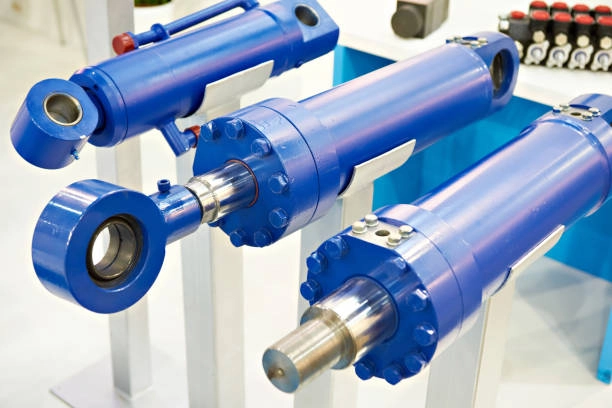
Rod diameter deserves more attention than it usually gets. Many poor cylinder selections have an acceptable bore and pressure rating, but a rod that is too slender for the load and stroke.
Why Rod Buckling Matters
A rod under compression behaves like a column. As stroke increases, buckling risk rises, especially with pin-mounted cylinders or cylinders working at an angle.
Long-stroke cylinders on dump equipment, construction machinery and lifting systems are obvious examples. A rod that is adequate at 200 mm stroke may be unsuitable at 1,200 mm.
Rod sizing should consider compression load, unsupported length, mounting condition, material strength and side loading. Euler buckling calculations are commonly used as an engineering check, but mounting geometry matters just as much as the equation.
Side load is another warning sign. Hydraulic cylinders prefer axial loading. If the linkage pushes the rod sideways, a larger rod may help, but improving guidance or geometry is usually the better fix.
Step 4: Determine the Required Stroke Length
Stroke is the distance the rod travels from fully retracted to fully extended. It should come from machine geometry, not from a preferred cylinder size.
Check the required motion at both ends of travel and make sure the linkage does not drive the cylinder against its internal stop. Retracted length, extended pin-to-pin dimension and mechanical clearance all matter.
Adding extra stroke “just in case” is rarely free. It increases cylinder length, oil volume and rod exposure. On long compression strokes, it also makes rod stability more difficult.
On an agricultural attachment, even another 20 mm of travel can change closed length, mounting position and buckling calculations.
Step 5: Check the Hydraulic Cylinder Working Pressure
Working pressure is not the same as the highest number a hydraulic system can briefly produce.
A cylinder specification should distinguish normal operating pressure, maximum pressure, transient pressure spikes and test pressure. The barrel, welds, piston, end caps, seals and ports all need to suit the actual condition.
Higher pressure can reduce the bore needed for a given force, which helps when installation space is tight. But it also raises demands on seals, hoses, valves and structural parts.
Mobile equipment often sees pressure spikes. Shock loading near the end of travel or sudden valve closure can create short peaks above normal system pressure. Those conditions should be considered during selection.
Example of Hydraulic Cylinder Sizing
Consider a cylinder that must produce 100 kN of pushing force at 16 MPa, with a required stroke of 500 mm.
The minimum piston area is:
100,000 N ÷ 16,000,000 Pa = 0.00625 m²
That corresponds to a bore of about 89 mm. A standard 90 mm or 100 mm bore may be selected depending on pressure margin, duty cycle and the cylinder series being used.
The rod diameter is then checked against the 500 mm stroke, compressive load and mounting condition. It should not be chosen by bore ratio alone.
The final design also needs to confirm pin centers, retracted length, seal type and pressure rating. The calculation gets the cylinder into the right range. Machine geometry decides whether it actually works.
Other Factors to Consider When Sizing a Hydraulic Cylinder
Bore, rod, stroke and pressure define the main geometry, but they do not describe the whole application.
Mounting type changes load behavior. Speed depends on pump flow. High duty cycles can raise oil and seal temperatures. Dust, mud, fertilizer, road salt and washdown conditions may change the preferred rod coating, seal package or wiper design.
Cushioning may be needed where a heavy load approaches the end of stroke at speed. In other machines, a mechanical stop may be more appropriate.
Two cylinders with the same bore and stroke can have very different service lives because one works indoors and the other spends every day on a loader in mud and dust.
Need Help Sizing a Hydraulic Cylinder for Your Equipment?
For OEM equipment, cylinder sizing should be tied to the machine rather than treated as a catalog exercise.
Shining Hydraulic develops hydraulic cylinders for machinery applications and can work from operating load, system pressure, stroke, mounting dimensions or an existing cylinder drawing. Bore size, rod diameter, pressure rating, seals, surface treatment and mounting details can be adjusted around the application.
Contact Shining Hydraulic with your required load, working pressure, stroke, mounting dimensions, application, or existing cylinder drawing to discuss a custom hydraulic cylinder solution.
FAQ
Q: How do I calculate the bore size of a hydraulic cylinder?
Divide the required cylinder force by the available hydraulic pressure to find the minimum piston area, then convert that area into bore diameter. Select a practical bore above the theoretical minimum and verify force at the machine’s real operating pressure.
Q: Does a larger hydraulic cylinder bore produce more force?
Yes. At the same hydraulic pressure, a larger bore creates more piston area and therefore more extension force. It also requires more oil per stroke, which can reduce speed if pump flow remains unchanged.
Q: How do I choose the correct hydraulic cylinder rod diameter?
Rod diameter depends on load, stroke, mounting method, working pressure and buckling risk. Long-stroke cylinders under compression need particular attention. Side loads should also be checked because increasing rod diameter is not a complete solution for poor machine alignment.