When you ask for a hydraulic cylinder quote, the correctness of your drawings and details really decides how quickly and exactly a manufacturer can reply. A good request saves time. It cuts down on mix-ups. And it makes sure the end product fits your machine’s needs well.
Why Accurate Information Matters for a Hydraulic Cylinder Quote
Exact technical facts let engineers check if something works and figure costs with trust. Clear drawings also lower talk errors between design and making teams. In real life, this means less back-and-forth messages. It leads to quicker response times.
The Role of Drawings in Custom Hydraulic Cylinder Manufacturing
Drawings serve as a common way to talk between customers and engineers. They show key points—like sizes, allowed errors, materials, and how to attach. These define how a custom hydraulic cylinder will work. Engineers look at these drawings to confirm it fits with the customer’s current gear setup. Right papers make sure each cylinder hits its planned work needs under certain load or pressure setups.
Essential Drawings to Include When Requesting a Cylinder Quote
A full set of drawings removes confusion. It gives the manufacturer all it needs to judge cost, if it can work, and how long it takes. All this happens with care.
General Assembly Drawing
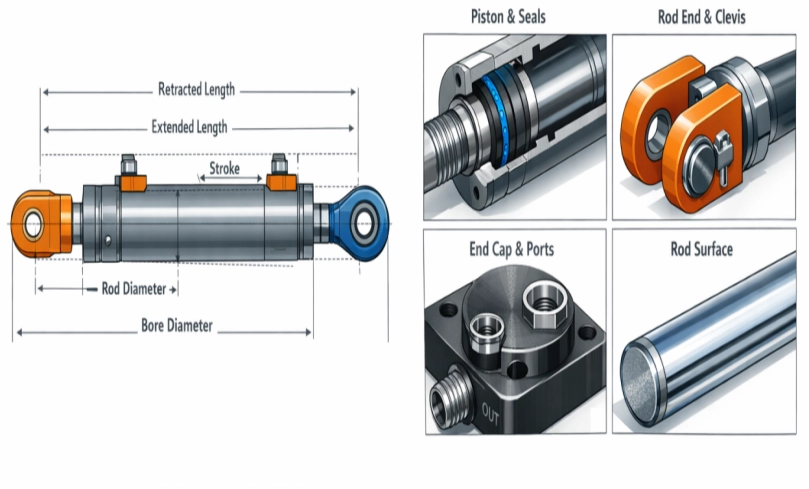
This drawing gives a big picture of the cylinder’s build: total length, stroke area, how it attaches, and link spots with other parts. It also helps suppliers see space limits in your machine or vehicle body. Without this drawing, even tiny fit problems might lead to setup troubles down the line.
Component Detail Drawings
Drawings at the part level—for piston rods, barrels, end caps, seals, ports—allow exact cutting cost guesses. These facts let manufacturers guess material use right. At the same time, they plan smart cutting jobs.
| Component | Key Details | Purpose |
| Piston Rod | Diameter & finish | Defines strength & wear resistance |
| Barrel | Inner bore tolerance | Determines sealing performance |
| End Cap | Thread & port specs | Ensures correct fluid connection |
Mounting Configuration Drawings
Mounting setup impacts both steady hold and simple putting together. If you pick clevis, flange, trunnion, or foot mount kinds, add hole measures and line notes in your drawing group. This makes sure it fits well in your use setting—above all for tough areas like mining or cleanup trucks where shake resistance counts.
Key Specifications to Send for an Accurate Cylinder Quote
Drawings by themselves are not enough. They need backup from plain technical details that explain how the cylinder should act.
Dimensional Specifications
Give bore measure, rod width, stroke measure, pulled-back/stretched lengths—all key for size math. Do not skip port measures and thread rules for hydraulic links. These touch system fit during setup.
Performance Requirements
Manufacturers want work pressure areas (like 210 bar top), needed push output (kN or tons), and planned work cycle facts. They use this to pick part strength and how long it lasts before tiring. Such info helps make sure it stays reliable in true-world spots.
Material and Surface Treatment Details
Choosing materials sets lasting strength and fight against rust:
- Cylinder barrel: steel or stainless steel based on the spot
- Rod coating: chrome plating or induction hardening for better wear time
- Seals: matching with work fluids (mineral oil or synthetic)
For case, in sea or cleanup spots with lots of wet, stainless steel build might beat usual carbon steel picks.
Additional Information That Helps Manufacturers Provide Better Quotes
Besides technical facts, background data on your use spot can boost quote correctness a lot.
Application Environment Details
Tell what type of machine the cylinder will help—like a building digger, farm presser, mining drill tool—and note special work spots such as very hot or cold or dusty places. The company stands as a hard worker in hydraulic tech. This know-how lets Shining Hydraulics engineers fit fixes to exact field problems. Like fight against rust or quick move control.
Hydraulic System Compatibility Data
Add info about:
- Type of hydraulic fluid used
- System flow rate & maximum pressure
- Control method (manual valve vs electronic proportional control)
These settings help make sure it joins your current setup smooth without changing other parts.
Benefits of Providing Complete Drawings and Specs to the Manufacturer
A full hand-in helps both sides. It hurries up quoting. And it betters design care all through making plans.
- Faster Quotation Turnaround Time
- Improved Design Optimization Support
- Higher Accuracy in Production Planning
Communicating with the Manufacturer Effectively
For accurate, timely, and cost-effective hydraulic cylinder quotes, make sure to provide complete and detailed drawings along with essential specifications. This will ensure a faster, more precise response from your manufacturer, saving you time and effort.
Looking to get started? Shining Hydraulics is ready to assist you with expert engineering support, tailored solutions, and quick turnaround times. Reach out today to ensure your project gets the attention it deserves!
FAQs
Q1: What file format should I use when sending cylinder drawings?
PDF is ideal for general viewing; CAD files are best for detailed engineering review.
Q2: How long does it take Shining Hydraulics to provide a quote?
Typically within a few working days if all drawings and specifications are complete.
Q3: Can I request material recommendations from Shining Hydraulics?
Yes—engineers often suggest alternative materials based on application environment or cost goals.
Q4: Do I need 3D models for quotation?
Not mandatory but helpful when complex mounting interfaces are involved.
Q5: What industries does Shining Hydraulics serve?
Construction machinery, agricultural equipment, mining machinery, sanitation vehicles, aerial work platforms, etc.