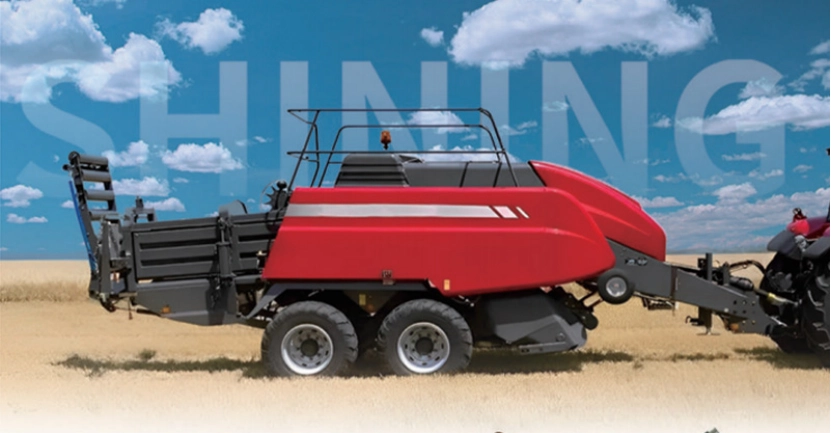
A square baler looks simple from the field edge: crop enters, a bale comes out. Inside, loads change constantly. The pick-up follows uneven ground, cutting parts cycle through dense material, and some components must stay fixed under pressure for hours.
That is why square balers rarely use one general purpose cylinder. Each hydraulic cylinder is selected around a particular movement, load direction, stroke, and mounting geometry. Similar looking cylinders can behave very differently once installed.
Why Do Square Balers Use Different Hydraulic Cylinders?
A cylinder raising a pick-up assembly does not work under the same conditions as one holding a chamber in position. The pick-up cylinder cycles frequently near dust, straw, moisture, and ground debris. A support cylinder may move only occasionally, but it must hold without drifting.
The main differences are force, stroke, speed, duty cycle, mounting angle, and side load resistance. Space matters too. Many balers leave little room for larger pins or hose bends.
A sound design starts with the machine movement, not the cylinder catalog. Incorrect replacements are often chosen because the closed length and pin diameter seem close enough.
What Are the 7 Types of Hydraulic Cylinders Used in Square Balers?
The exact arrangement changes between baler models. Some machines combine functions; others use separate cylinders for adjustment, support, and access. These seven types cover the common hydraulic movements found around square baler assemblies.
1. Bottom Blade Cylinder
The bottom blade cylinder operates or positions the lower cutting mechanism. It must repeat the same movement while crop density changes from one windrow to the next.
Pressure spikes are common when wet or packed material reaches the cutting area. Excessive pin clearance, poor alignment, or a weak rod connection can produce uneven blade travel. The complaint is often “the blade will not cut cleanly,” even when the blade is sharp.
Accurate stroke, rigid mounting, and impact resistance matter more here than oversized force capacity.
2. Bottom Cabin Cylinder
The bottom cabin cylinder moves or positions the lower chamber structure. Depending on the machine, it may open the area for discharge, cleaning, inspection, or service.
The load can be heavy and badly balanced. Force should be checked through the full movement angle, especially where leverage is poor.
Mounting bracket stiffness deserves attention. A larger bore will not correct a flexible bracket or a pin hole already wearing oval.
3. Adjustment Cylinder
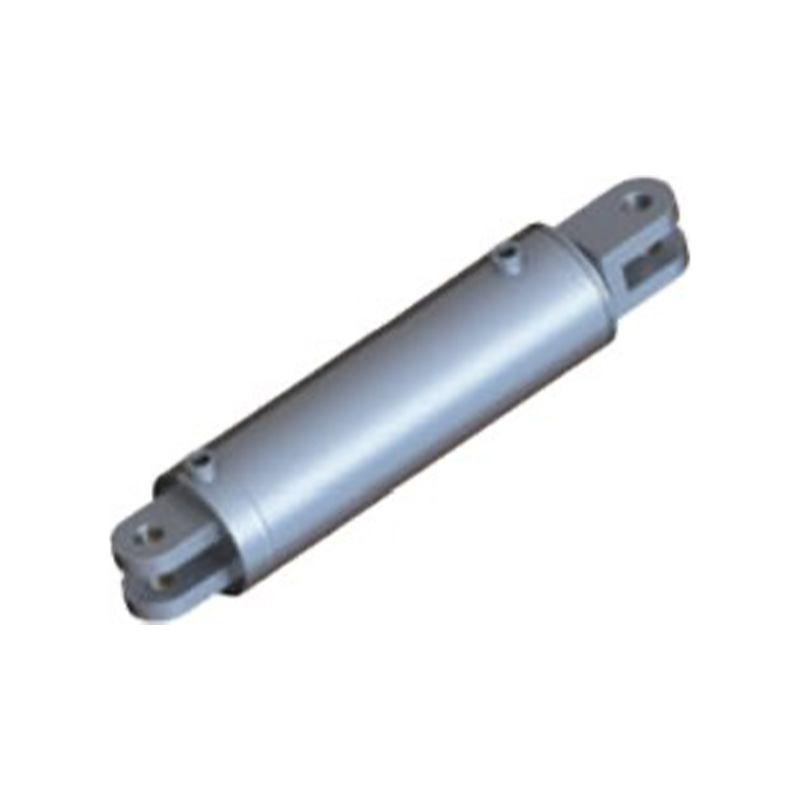
Adjustment cylinders change height, angle, pressure, or position within the baler. They help adapt the machine to crop volume, bale settings, and field conditions.
These cylinders are judged by smoothness and position control rather than peak force. Small internal leakage still causes trouble. The setting moves, the operator corrects it, then corrects it again. Hours later, bale consistency is gone.
Good seals, clean oil, controlled clearances, and correct alignment are more useful than simply increasing cylinder size.
4. Pick-Up Cylinder
The pick-up cylinder raises and lowers the crop pick-up assembly. It sets working height and lifts the assembly for transport, turns, or obstacle clearance.
This is one of the most exposed cylinders on the machine. Dust sticks to an oily rod. Stones and hard stems scratch the surface. A small mark may not leak immediately, but repeated cycling can damage the rod seal.
A pick-up that slowly drops may indicate cylinder bypass, valve leakage, or another circuit problem. Replacing the cylinder without isolating the fault is an expensive guess.
5. Lifting Cylinder
Lifting cylinders raise covers, frames, chambers, or other heavy assemblies. These applications often involve changing leverage as the structure rotates.
Required force should be checked at the least favorable point. Packed crop, mud, hinge friction, and acceleration all add load.
Rod buckling also matters when the cylinder pushes through a long stroke. On service access applications, mechanical supports or load holding valves may be needed. Hydraulic pressure alone is not a safe prop.
6. Support Cylinder
A support cylinder holds or stabilizes a component after it reaches position. Movement may be short and infrequent, but position retention is critical.
Low internal leakage matters. A few millimeters of drift can alter chamber position, belt alignment, or working clearance.
Loose pins and worn bushings can create the same visible movement as hydraulic leakage. The cylinder, brackets, pins, and valve circuit should be checked as one system.
7. Pushing Cylinder
The pushing cylinder moves crop material, a bale, or a machine component through a controlled linear stroke. Resistance often rises near the end of movement when material is compressed or the discharge path is restricted.
Long strokes increase the importance of rod diameter and alignment. Side load can wear the bearing, score the tube, and damage seals unevenly.
End cushioning is useful where movement is fast. Repeated hard stops transfer shock into pins, brackets, welds, and hoses—even when the cylinder itself appears undamaged.
How Do You Select the Right Cylinder for a Square Baler?
A replacement should match the machine function, not just the outside shape. Installed measurements may be wrong if the rod is not fully retracted.
Useful selection data includes:
- Bore, rod diameter, and stroke
- Closed and extended pin to pin length
- Working pressure and pressure peaks
- Mounting style and pin dimensions
- Port thread, orientation, and hose clearance
- Push or pull load and movement speed
- Rod coating, seal material, and environment
For a custom cylinder, drawings are better than photographs. Photos still help when they show hose routing, guards, and both ends of travel. A technically correct cylinder is unusable if its port points into a frame rail.
What Problems Can Affect Square Baler Hydraulic Cylinders?
Most failures begin quietly: slight drift, a damp rod seal, uneven movement, or a new knock at the mounting pin.
Common causes include seal bypass, scratched or bent rods, contaminated oil, worn pins, damaged hoses, and misaligned brackets. Heat is another clue. A cylinder or valve section running hotter than the surrounding circuit may be passing oil internally.
Inspect the old cylinder before ordering a replacement. Uneven wear on one side of the rod bearing usually points to alignment trouble. Installing a new cylinder without correcting the bracket geometry only resets the clock.
Conclusion
The seven cylinder types perform different jobs and place different demands on the hardware. The correct specification is usually found in the machine geometry, load, pressure, and duty cycle—not in outside dimensions alone.
Choosing the right hydraulic cylinder is critical for performance, durability, and safe operation in demanding agricultural equipment. Whether you need a replacement cylinder or a customized solution for square balers, our engineering team can help you develop a cylinder that fits your application precisely.
Contact Shining Hydraulic today to discuss your hydraulic cylinder requirements and get a professional solution for your baler equipment.
FAQ About Square Baler Hydraulic Cylinders
Q: Can one hydraulic cylinder replace a different cylinder type?
Only when force, stroke, closed length, mounting, port arrangement, speed, and load direction all match. Similar appearance is not enough.
Q: What information is needed for a replacement square baler cylinder?
Provide bore, rod diameter, stroke, pin to pin dimensions, mounting details, port type, operating pressure, and clear installation photographs.
Q: Why does a square baler cylinder drift under load?
Possible causes include piston seal leakage, valve leakage, hose leakage, or an external load pushing oil through the circuit. Isolate and test the cylinder before replacement.
Q: Are welded cylinders suitable for square balers?
Yes. Welded cylinders suit compact installations and custom mounting well. Weld quality, alignment, pin design, and pressure rating still need to match the real load.