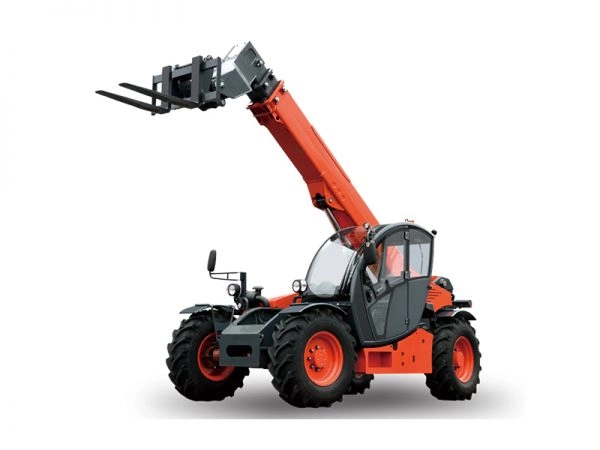
A telehandler asks a great deal from its hydraulic cylinders. The boom must lift a heavy load, extend without excessive movement, hold its position and return smoothly. All of this may happen on uneven ground, in cold weather, with dust packed around the seals.
Choosing the right telehandler hydraulic cylinder means looking at the whole operating condition—not one attractive specification.
Why Does Choosing the Right Telehandler Hydraulic Cylinder Matter?
Telehandler cylinders work under changing loads rather than steady laboratory conditions. A boom may lift normally in the yard, then experience a sharp pressure spike when the operator brakes with the load raised. That moment matters.
Poor cylinder selection can cause slow lifting, unstable movement, bent rods, seal leakage and damaged mounting pins.
What Type of Hydraulic Cylinder Does Your Telehandler Need?
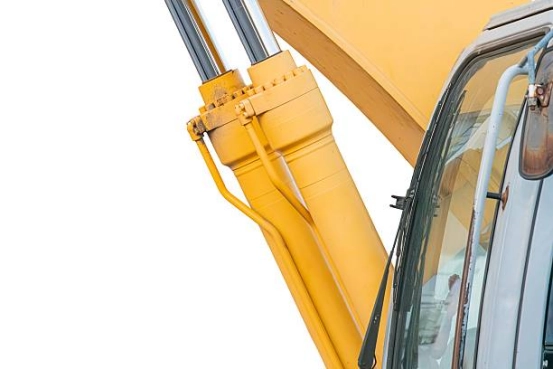
Start with the cylinder’s function. A telehandler may use lifting cylinders, follow-up cylinders, dumper cylinders, telescopic cylinders and cylinders for attachments.
These positions do not share the same requirements. A boom lift cylinder carries high loads and often needs strong end cushioning. An extension cylinder may have a long stroke and limited installation space. A steering cylinder cycles frequently but usually works with a shorter stroke.
What Are the 8 Key Specifications for a Telehandler Hydraulic Cylinder?
Increasing the bore changes force and oil demand. Increasing the rod diameter affects retracting force and cylinder weight. Changing the mounting geometry may introduce side loading. Treating each item separately rarely produces a good result.
1. Cylinder Bore
Cylinder bore determines piston area and has a direct effect on pushing force. The required bore should be calculated from the working pressure, load and mechanical geometry of the boom.
Rated load is only part of the picture. A telehandler carrying pallets across broken ground sees dynamic loading that does not appear in a static lifting calculation. A reasonable safety margin is needed, but an oversized bore is not automatically better. It increases oil volume, weight and sometimes cycle time.
The cylinder should generate enough force at the machine’s real operating pressure—not only at the pump’s theoretical maximum.
2. Piston Rod Diameter
The piston rod must resist compression, bending and surface damage. Long stroke boom cylinders deserve particular attention because buckling risk rises as the unsupported rod length increases.
An undersized rod may not fail dramatically. It may bend slightly, then begin wearing the guide and rod seal on one side. The operator notices oil on the rod a few weeks later. The seal gets blamed, although the real problem is structural.
Rod material, hardness and surface finish also affect service life. Diameter is important, but diameter alone does not define a durable rod.
3. Stroke and Installation Length
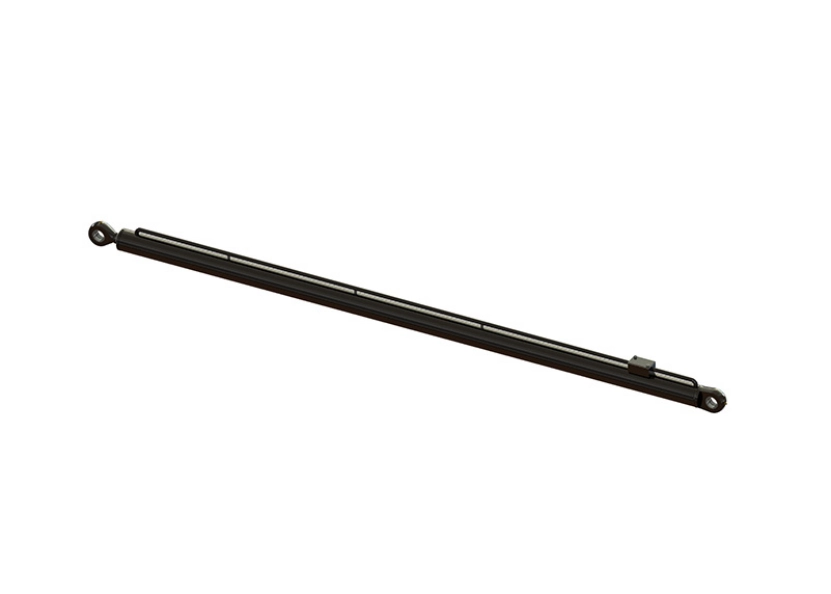
Stroke controls the movement range, while retracted and extended lengths determine whether the cylinder fits the machine.
Check the stroke, pin to pin distance, mounting width and available clearance around the cylinder body. Hose routing should also be considered. A port that clears the boom when retracted may contact a bracket at full extension.
Replacement projects often go wrong because only the visible rod travel is measured. The safer approach is to record the closed center distance, fully extended center distance and mounting dimensions. An original drawing is ideal. A carefully measured sample is usually workable.
4. Working Pressure and Load Capacity
Normal working pressure, maximum system pressure and short pressure spikes are different values. The cylinder must tolerate all three.
Pressure spikes commonly occur when a loaded boom stops abruptly or when the machine moves over uneven ground. These events affect the barrel, piston, rod, welds and mounting eyes. A strong barrel does not compensate for a weak connection weld.
Load capacity should therefore be checked across the complete assembly. In heavy boom applications, forged mounting components are often preferable to lightly fabricated connections, particularly where repeated impact is expected.
5. Mounting Style and Port Configuration
Common mounting arrangements include clevis, eye, pin, flange and trunnion designs. The correct choice depends on how the cylinder needs to pivot and how the load is transferred into the machine structure.
Confirm port thread, size, orientation and hose clearance. Reversing a port position sounds like a small change. On a compact boom assembly, it may decide whether the hose can be installed without rubbing against steel.
6. Seal Material and Temperature Range
Seal selection should match the hydraulic oil, temperature, pressure, operating speed and contamination level.
Telehandlers used on farms and construction sites often work around fine dust, mud and moisture. A suitable wiper is just as important as the pressure seal because contamination carried along the rod damages the seal system from the outside.
7. Rod Coating and Corrosion Protection
The exposed rod surface passes through the sealing system during every cycle. Corrosion pits, scratches and poor surface finish quickly become seal damaging edges.
Hard chrome plating remains common for telehandler cylinders, though coating thickness, hardness and surface preparation vary considerably. Outdoor machines may need stronger corrosion protection, especially around coastal sites, fertilizer handling or winter road salt.
Paint quality on the barrel also matters. The area around welds, ports and mounting joints is where coating failures often begin.
8. Cushioning and Side Load Resistance
End cushioning slows the piston near the end of its stroke. It reduces impact, noise and stress on the cylinder and machine structure.
Cushioning is particularly useful for heavy boom movement, frequent cycling and applications where the operator regularly reaches full stroke. It should not make the cylinder unreasonably slow, however. Cushion design needs to match speed and oil flow.
Hydraulic cylinders are mainly intended for axial loading. They cannot completely resist poor machine geometry. If the boom twists under load or the mounting points are misaligned, the cylinder will absorb forces it was not designed to carry. No seal upgrade will fix that.
What Information Should You Provide to the Cylinder Manufacturer?
A useful inquiry includes more than a machine name and a photograph. Provide:
- Cylinder function and telehandler model
- Bore, rod diameter and stroke
- Retracted and extended center distances
- Working pressure and maximum pressure
- Mounting dimensions and pin sizes
- Port thread, size and orientation
- Hydraulic oil type
- Operating temperature
- Load conditions and cycle frequency
- Drawings, photographs or an existing sample
Details about previous failures are also valuable. A bent rod, repeated seal leakage or cracked mounting eye points toward a design issue that should not be copied into the replacement cylinder.
When Is a Custom Telehandler Hydraulic Cylinder Necessary?
A custom cylinder is usually justified when the original part is discontinued, mounting dimensions are non-standard or the machine has unusual pressure, stroke or environmental requirements.
Customization is also worth considering when the existing cylinder fails repeatedly in the same way. Copying every original dimension may simply reproduce the weakness. A larger rod, improved guide arrangement, different sealing system or stronger mounting connection may provide a better solution.
Contact Shining Hydraulic today with your cylinder requirements, drawings or sample details. Our team will help you find a durable, efficient and cost-effective hydraulic cylinder solution for your equipment.
FAQ
Q: Can a standard hydraulic cylinder be used on a telehandler?
Sometimes, but only when the force, pressure, stroke, mounting dimensions, ports and environmental requirements all match. Telehandler installations are often compact, so standard cylinders frequently require modification.
Q: How can a replacement telehandler cylinder be measured?
Measure the bore, rod diameter, stroke, retracted center distance, extended center distance, pin diameters, mounting widths and port details. Record port orientation before removing hoses.
Q: What causes a telehandler hydraulic cylinder to drift?
Common causes include internal seal leakage, valve leakage, damaged piston components or contamination. The cylinder should not be blamed until the control valve and hydraulic circuit have also been checked.
Q: Does a larger cylinder bore always improve lifting performance?
No. A larger bore increases force but also requires more oil, adds weight and may reduce operating speed. The bore should match the available pressure and required load.
Q: When should a telehandler cylinder be replaced instead of repaired?
Replacement is usually more sensible when the rod is badly bent, the barrel is distorted, mounting components are cracked or repair costs approach the cost of a properly specified new cylinder.