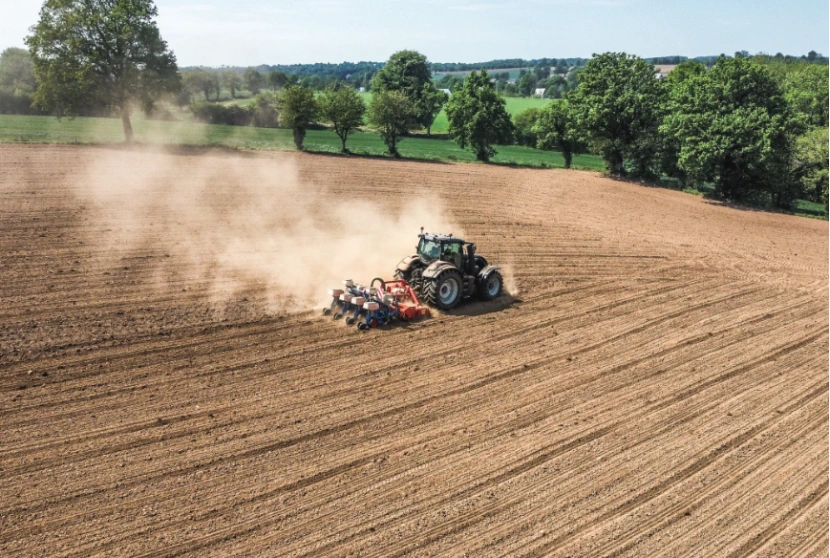
A hydraulic cylinder on a cultivator or soil preparation machine rarely enjoys an easy working life. It operates close to dust, stones, fertilizer, mud, and crop residue. Shock loads pass through the frame whenever a tine hits compacted soil. During transport, the same cylinder may need to hold a heavy implement steady for hours.
A cylinder that fits the mounting points may still be wrong for the job. Bore size, rod strength, seals, mounting geometry, and corrosion protection all affect whether it lasts one season or several.
What Does a Hydraulic Cylinder Do in Land Preparation Equipment?
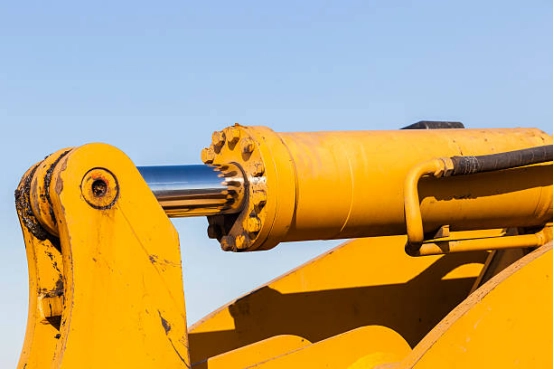
Hydraulic cylinders convert oil pressure into the linear force needed to move an implement. On land preparation equipment, they commonly perform several tasks:
- Raise and lower the working frame
- Set the operating depth of discs, blades, or tines
- Fold wide sections into a safe transport position
- Adjust working angles
- Hold components in position on uneven ground
The cylinder should be selected around its actual function, not simply copied from another position on the machine.
What Operating Conditions Should You Evaluate First?
A useful specification begins in the field. Rated pressure alone says little about shock, contamination, cycle frequency, or poor alignment.
Load and duty cycle
Estimate the normal load, then look for the less obvious peak loads. A buried tine catching a rock can generate a force far above the steady draft load. Folding mechanisms also create changing leverage as they move through their arc.
Check:
- Normal and maximum pushing force
- Pulling force during retraction
- Frequency of extension and retraction
- Time spent holding a raised load
- Expected movement speed
- Shock loads at startup or stroke end
A safety margin is necessary, though extreme oversizing is not always helpful. It adds weight, consumes more oil, and can make movement harder to control.
Field environment
Rod seals and wipers on agricultural equipment work in abrasive conditions. Fine dust can collect on a wet piston rod, forming a grinding paste that is pulled toward the gland with every cycle.
The specification should account for:
- Fertilizer or chemical exposure
- Vibration and repeated impact
- Possible side loading
A machine stored outdoors also needs better corrosion protection than one used inside a factory. This sounds obvious. It is still regularly missed.
How Do You Determine the Correct Cylinder Size?
Cylinder sizing is a force and geometry problem. Catalog dimensions come later.
Bore diameter and required force
Cylinder extension force is based on hydraulic pressure and piston area:
Force = Pressure × Piston Area
The theoretical result is not the force available at the implement. Pressure losses, seal friction, linkage geometry, and changing soil resistance reduce usable output. The machine may also deliver less than its nominal system pressure during simultaneous functions.
Choose a bore that provides adequate force under realistic operating pressure, with a reasonable margin for short peak loads. Do not assume that increasing pressure will compensate for an undersized bore. That decision often transfers the problem to hoses, valves, pins, and frame welds.
Retraction force is lower because the piston rod reduces the effective area. This matters when a cylinder must pull a working tool out of compacted soil.
Rod diameter
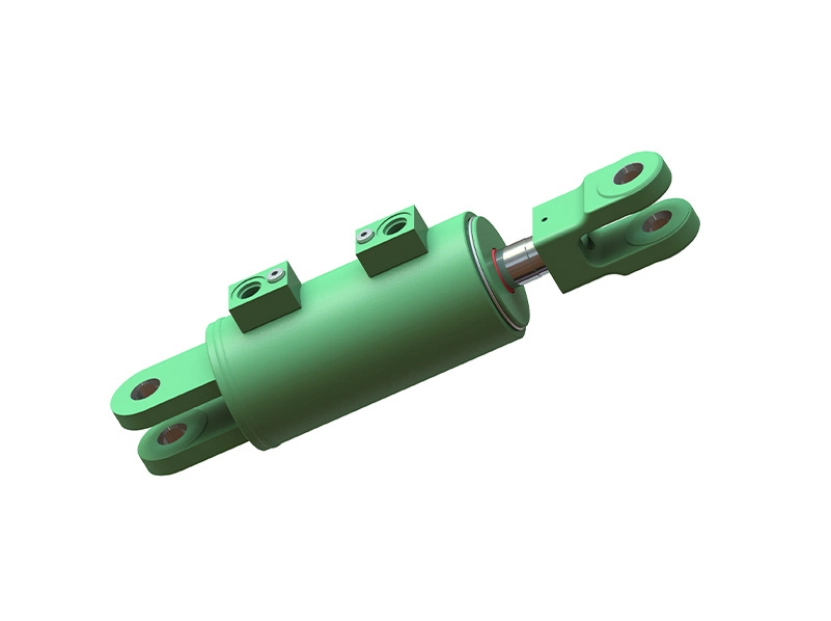
The rod must handle compression without bending or buckling. Risk increases with a long stroke, a small rod diameter, poor mounting alignment, and a load that pushes rather than pulls.
A slightly bent rod may continue operating, but seal wear usually accelerates. The operator sees a leaking gland; the original cause may be a side-loaded or undersized rod.
Rod diameter should therefore be checked against unsupported length and maximum compressive force—not selected only from the required bore.
Stroke length and installation dimensions
Measure the movement required at the implement and relate it to the linkage geometry. Confirm:
- Required stroke
- Retracted pin-to-pin dimension
- Extended pin-to-pin dimension
- Available space around the cylinder
- Hose clearance through the complete movement
- Mechanical stops on the machine
The cylinder should not act as the machine’s structural stop unless it was specifically designed for that load. Bottoming out a cylinder at speed sends a sharp pressure spike through the barrel, piston, mounts, and hydraulic circuit.
Drawings are preferable. An existing sample is useful too, provided it has not already been modified in the field.
Which Mounting Style and Port Configuration Fit the Machine?
Mounting geometry determines how force enters the frame. Clevis and pin-eye mounts allow pivoting and are common on agricultural implements. Flange, trunnion, and custom lug arrangements suit other load paths.
Ports that face the wrong direction create awkward hose loops. Those loops catch crop residue, rub against the frame, or tighten as the implement folds. It is a small drawing detail with a very visible field consequence.
Misaligned mounts are more serious. A hydraulic cylinder produces axial force well; it is not a guide rail. The machine structure should absorb lateral loads.
Which Materials and Construction Features Improve Service Life?
Agricultural cylinders do not need exotic materials everywhere. They do need sound materials in the right places, along with consistent machining and welding.
Cylinder tube, piston rod, and connections
Look for a honed or similarly finished tube bore, reliable weld penetration, and connection points built for repeated impact. Forged lugs or reinforced pin eyes are usually preferable in high-load positions.
The piston rod needs adequate hardness, surface finish, and corrosion resistance. Chrome quality matters because small pits or flaking quickly damage the rod seal. On machines exposed to fertilizer, road salt, or long outdoor storage, a higher-grade coating may justify its cost.
Internal piston and nut retention also deserves attention. Vibration can loosen components that would remain secure in a stationary industrial machine.
Seals, wipers, and cushioning
A good sealing system should match the oil, temperature, pressure, speed, and contamination level. More seals are not automatically better.
Cushioning is particularly valuable on folding sections. It reduces the impact near stroke end, although it cannot correct an incorrectly sized cylinder or missing mechanical stop.
When Should You Choose a Standard or Custom Hydraulic Cylinder?
Standard cylinders work well when the machine uses common dimensions and moderate operating conditions. Customization becomes practical when installation space, mounting geometry, load behavior, or environmental exposure falls outside those common limits.
| Selection factor | Standard cylinder | Custom cylinder |
| Dimensions | Fixed common sizes | Matched to the machine |
| Mounting | Common configurations | Application-specific geometry |
| Load capability | General-duty ranges | Designed around actual loads |
| Ports and cushioning | Limited options | Configurable |
| Lead time | Usually shorter | Engineering time required |
| Typical use | Routine replacement | OEM and specialized equipment |
A custom cylinder is not necessarily a complicated cylinder. Sometimes the only meaningful changes are port orientation, mounting width, rod coating, or a stronger wiper.
What Information Should You Give the Cylinder Manufacturer?
A vague request produces a vague recommendation. Give the manufacturer enough information to understand the load and the machine.
- Equipment type and cylinder function
- Normal and maximum system pressure
- Required push and pull force
- Bore, rod diameter, and stroke
- Retracted and extended dimensions
- Mounting and pin dimensions
- Hydraulic fluid and temperature range
- Cushioning, coating, sensor, or seal requirements
- Drawings, photographs, or an existing sample
Photos help, but a dimensioned drawing prevents expensive assumptions.
Conclusion: Choose for the Application, Not Just the Dimensions
A replacement cylinder can match the old unit externally and still fail because its rod, seals, welds, or internal retention were intended for lighter service. Load behavior and field contamination deserve as much attention as bore and stroke.
For equipment with unusual mounting geometry or severe working conditions, an application-specific hydraulic cylinder for land preparation equipment is usually the more defensible choice.
Contact Shining Hydraulic today to discuss your hydraulic cylinder needs and get a solution engineered for better durability, efficiency, and field performance.
FAQ
Q: Can a larger-bore cylinder replace the original cylinder?
Not automatically. A larger bore produces more force but requires more oil, changes movement speed, and may overload pins or the machine frame.
Q: Why does an agricultural hydraulic cylinder leak around the rod?
Common causes include damaged rod surfaces, worn seals, contamination, side loading, excessive pressure, and rod misalignment.
Q: Is end-of-stroke cushioning necessary?
It is useful for fast-moving or high-inertia parts such as folding wings. Slow, lightly loaded functions may not need it.