A hydraulic cylinder may have the right bore. It may have the correct stroke, rod diameter, and pressure rating. Still it can fail early. This happens because the mounting arrangement is wrong. The mount decides how force enters the machine. It shows how the cylinder follows movement. It also checks whether the rod stays aligned through the full stroke.
A poor choice may run for weeks. Then the rod seal leaks. Pin holes become oval. Or the rod develops a slight bend. By then the mounting problem has moved into the cylinder.
What Is a Hydraulic Cylinder Mounting Type?
A hydraulic cylinder mounting type describes how the barrel end and rod end connect to the machine structure. Some mounts hold the cylinder in a fixed position. Others allow it to pivot as the mechanism moves.
The useful question is how the load travels through the cylinder and into the frame. Fixed mounts suit a stable centerline. Pivoting mounts suit attachment points that follow an arc.
Flange, foot, and side lug designs are normally fixed. Clevis, trunnion, eye, and spherical bearing arrangements allow angular movement.
Common Hydraulic Cylinder Mounting Types
Each mounting style changes the way the cylinder reacts to force. Two cylinders with identical internal dimensions may behave very differently once installed.
Clevis Mounts
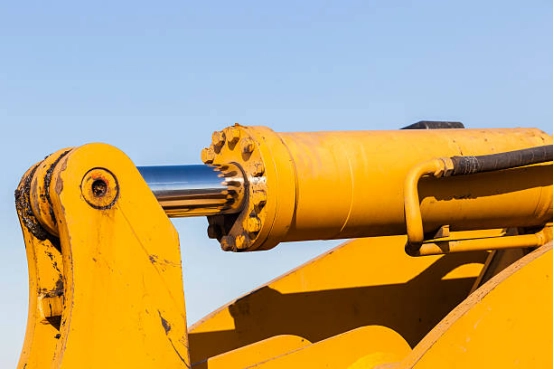
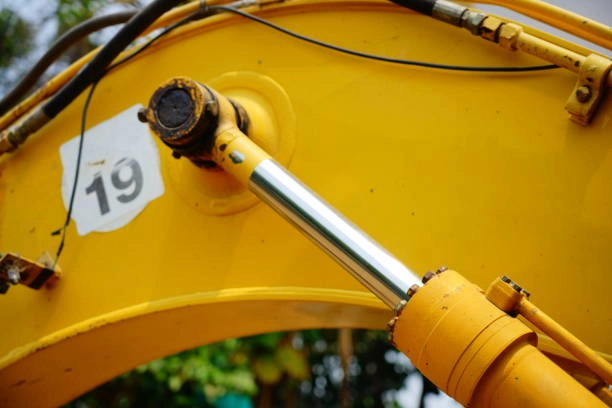
A clevis mount uses a pin connection at the cylinder base, often paired with an eye or clevis at the rod end. The joint lets the cylinder rotate in one plane as the equipment moves.
This simple, serviceable design is common on excavator attachments, agricultural implements, dump bodies, and waste compactors.
Pin alignment matters. A pin forced through misaligned brackets places side load on the rod as soon as the cylinder moves. Hardened pins, suitable bushings, and regular lubrication are worth specifying.
Trunnion Mounts
Trunnion mounts use cylindrical pivots near the front, center, or rear of the barrel. They suit lifting mechanisms, presses, compactors, and machines where the cylinder must rotate through a wide angle.
Trunnion position is a design decision, not a catalog detail. Moving it may solve an interference problem but increase load on the front guide or support frame. Geometry always collects its payment somewhere.
Flange Mounts
Flange mounts create a rigid connection at the head or cap end. They handle axial force well and are widely used on presses, molding equipment, test rigs, and stationary machines.
The mounting face must be flat and supported. A distorted plate can pull the cylinder out of alignment, so bolt pattern and frame stiffness matter as much as cylinder pressure.
Foot or Side Lug Mounts
Foot and side lug mounts secure the cylinder along the barrel. They are practical where the cylinder remains fixed and accessible, such as machine tools and stationary hydraulic equipment.
The concern is bending moment. Force acts along the rod centerline, while the mounting reaction occurs below or beside it. That offset creates torque in the mount and frame. A rigid base and correct bolt preload help prevent movement during repeated cycles.
Spherical Bearing and Eye Mounts
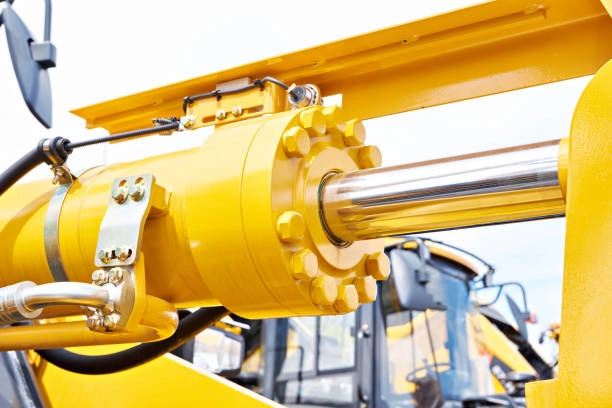
Eye mounts provide a compact pin connection. A spherical bearing allows small angular movement in more than one plane and helps accommodate minor installation variation.
They suit construction machinery, aerial platforms, and agricultural equipment whose frames flex under load. A spherical bearing tolerates minor angular error; it cannot repair bad geometry. Visible sideways bending means the mechanism needs redesign.
Key Factors When Selecting a Cylinder Mounting Type
Mount selection should begin with machine movement, not with a cylinder catalog. A few checks usually expose trouble before steel is cut.
Load Direction
The load should stay close to the cylinder centerline. Confirm whether the cylinder pushes, pulls, or alternates. Shock loads and abrupt stops also matter.
Compression loads may introduce rod buckling, especially with long strokes. Tension loads place more demand on rod end threads and eyes. Any offset between the load and rod axis creates side force.
Required Movement
A rigid mount belongs in a mechanism with a fixed line of action. A pivoting mount belongs where the connection points move through an arc.
A common error is a clevis mounted base combined with a rigid rod connection. The cylinder can pivot at one end but is trapped at the other. Binding appears near the end of the stroke, often only under full load. Both ends must follow the same motion logic.
Available Installation Space
Check more than retracted length. The cylinder needs room for hoses, ports, grease fittings, pin removal, and maintenance access.
A trunnion may solve a length problem but obstruct hose routing. A rear clevis may fit yet leave no space to remove the pin. Such layout issues reach production when the cylinder is reviewed only as an envelope.
Alignment and Side Load Control
Hydraulic cylinders produce axial force. Continuous side loading wears the rod bearing, wear bands, seals, and barrel.
Misalignment may come from bracket position, frame deflection, pin clearance, or changing machine geometry. Spherical bearings can manage small angular changes. Long stroke cylinders need extra attention because the rod may be aligned at retraction and unstable near full extension.
Operating Environment
Dust, mud, salt, heat, vibration, and washdown conditions affect the mount as well as the seals.
Construction and mining equipment often need protected grease points, corrosion resistant pins, and replaceable bushings. An exposed pin may seize long before the barrel shows damage.
Common Mounting Selection Mistakes
Several mistakes appear repeatedly in failed installations:
- Using a rigid mount where the cylinder must pivot
- Allowing brackets to pull the cylinder out of alignment
- Selecting undersized pins, bushings, or mounting bolts
- Ignoring frame deflection under maximum load
- Leaving insufficient clearance for hoses or pin removal
- Using the cylinder to compensate for poor machine geometry
- Treating spherical bearings as a cure for severe side loading
These errors leave evidence: one sided rod wear, uneven bushing damage, cracked bracket welds, or repeated seal failure on the same side.
When Is a Custom Mounting Design Required?
A custom mounting design makes sense when standard dimensions do not match the equipment, installation space is restricted, or the cylinder must handle unusual shock, angular movement, or duty cycles.
OEM projects often need custom clevis widths, pin diameters, flange patterns, trunnion positions, or rod end threads. Matching only bore and stroke is rarely enough. The new cylinder must also reproduce the original machine geometry.
Useful information includes drawings, pin center dimensions, stroke, bore, pressure, load direction, operating angle, photos, and environmental conditions. Photos help when an old cylinder no longer matches its drawing.
Work with Shining Hydraulic for the Right Cylinder Solution
Shining Hydraulic manufactures hydraulic cylinders and related products for machinery and equipment applications. Mounting arrangements can be developed around the load path, stroke, available space, operating angle, and service environment.
Options include clevis mounts, flanges, trunnions, welded eyes, spherical bearings, special pins, and application specific interfaces. Early geometry review can prevent side load, seal wear, and avoidable assembly changes.
Need help selecting a hydraulic cylinder mounting type for your equipment?
Contact Shining Hydraulic and share your cylinder specifications, drawings or application requirements. Our team can help you develop a reliable hydraulic cylinder solution for your machinery.
FAQ
Q: What is the most common hydraulic cylinder mounting type?
There is no single mounting type for every application. Clevis and eye mounts are common on mobile machinery because they allow pivoting. Flange and foot mounts are more common on stationary equipment with a fixed load direction.
Q: Can a hydraulic cylinder handle side loads?
A hydraulic cylinder may tolerate small temporary side forces. It should not carry continuous side load. Persistent side loading accelerates wear on the rod guide, seals, piston wear bands, and barrel. The machine structure should guide the load.
Q: Can hydraulic cylinder mounts be customized?
Yes. Clevis width, pin diameter, eye size, flange pattern, trunnion location, thread details, materials, and bearing arrangements can be customized to match OEM equipment and replacement requirements.