An automotive lift looks simple from the shop floor. The hydraulic cylinder is less visible, but it carries much of the real work. Its bore, stroke, mounting, pressure rating, and sealing system affect how the lift rises, holds, and returns to the floor.
A cylinder that “almost fits” is usually a bad replacement. A small error in closed length can stop a lift from lowering fully. The wrong bore may make it slow or push the power unit near its limit.
Where Hydraulic Cylinders Are Used in Automotive Lifts
Cylinder requirements change with the lift structure.
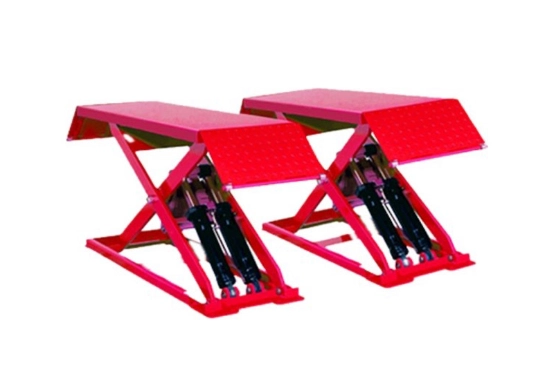
Scissor Lifts
In a scissor lift, the cylinder pushes through a linkage. Force demand is often highest near the lowered position, where the scissor angle is shallow.
A lift may rise normally after the first 200 mm but struggle to leave the floor. The pump gets blamed. Sometimes the issue is insufficient bore area or an incorrect mounting position.
Retracted length, pin alignment, rod clearance, and hose routing matter through the full cycle.
Two Post and Four Post Lifts
These lifts may use a direct acting cylinder, or a cylinder may pull chains and cables. The mechanical ratio changes the relationship between cylinder stroke and lifting travel.
For replacement work, confirm the chain or cable arrangement. A cylinder may fit the mounts but still fail to provide the required travel.
In-Ground and Mobile Lifting Equipment
In-ground cylinders face moisture, dirt, chemicals, and poor drainage. Mobile lifts see vibration and side loading from uneven floors.
These applications need good rod protection, corrosion resistance, mounting stiffness, and service access.
Seven Specifications Buyers Should Confirm
A drawing helps, but the manufacturer also needs lift geometry, pressure, duty cycle, and environment.
1. Rated Load and Required Lifting Force
Vehicle weight alone does not determine cylinder force. Linkage angle, platform weight, friction, and acceleration change the load seen by the cylinder.
Use the worst mechanical position and a sensible design margin. Oversizing is not automatically safer. A larger bore needs more oil, may slow the cycle, and adds cost.
2. Bore and Rod Diameter
Bore diameter controls extension force at a given pressure. Rod diameter affects buckling resistance, stiffness, retraction force, and bearing load.
Long stroke cylinders need careful rod sizing. A rod may survive a short test yet bend after repeated cycles under side load. Rod hardness, plating, and finish also influence seal life.
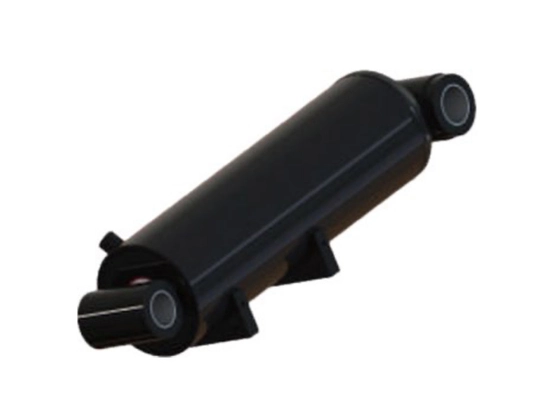
3. Stroke Length and Installation Dimensions
Confirm stroke, retracted pin to pin length, extended length, and body clearance. Do not assume the existing cylinder is correct; repaired lifts sometimes contain the wrong part.
A common field problem is a replacement with the correct stroke but a longer closed length. The platform then sits above floor level. A few millimeters become a daily problem.
4. Working and Test Pressure
Match the cylinder to normal operating pressure and possible pressure peaks. Provide the pump and relief valve settings, plus known shock conditions.
Testing should cover leakage, weld integrity, and holding performance. Agree on test pressure and duration before production.
5. Mounting Configuration
Clevis, cross tube, flange, trunnion, and custom pin mounts behave differently. Dimensions matter, but alignment matters just as much.
Hydraulic cylinders are intended mainly for axial force. Side loading wears the guide bush and seals, and may score the rod. Uneven seal damage often points to alignment trouble.
6. Port Size and Position
Specify the port thread, size, angle, and location on the drawing. Fittings need space and must remain clear of moving parts.
Port orientation looks minor during purchasing. It becomes important when an elbow fitting contacts the scissor frame halfway through the cycle.
7. Operating Speed and Cushioning
Lift speed affects oil flow, seal behavior, heat, and end of stroke impact. Most workshops prefer smooth, predictable control.
Cushioning may help where the cylinder reaches full extension at speed. In other designs, the valve or structure already controls deceleration. Unnecessary cushioning can make the final stroke feel slow.
Materials, Seals and Surface Protection
Cold drawn or honed tubing provides the internal surface needed for stable sealing. The piston rod needs suitable strength, straightness, hardness, and corrosion protection. Poor plating often appears as pits near the normal parking position.
Seal choice depends on pressure, oil type, temperature, speed, and contamination. Polyurethane suits many automotive lift cylinders, but cold climates, unusual fluids, or high cycle rates may require another compound.
Welded mounts deserve close inspection because they see repeated loading and vibration. Coatings should protect exposed steel without covering ports, pin bores, or sealing surfaces. Replaceable seal kits are worth specifying.
Common Buying Mistakes to Avoid
Price only comparisons hide important differences. Two cylinders with the same bore and stroke may use different tube walls, rod materials, seals, weld controls, and inspection standards.
Incomplete RFQs create trouble. Missing port information leads to hose changes. Missing pin tolerances cause loose joints or difficult assembly. Ignoring side load produces early rod and seal damage.
Automotive lift cylinders are not automatically interchangeable. Similar capacity lifts may use different linkage ratios and pressure settings. Provide the original drawing, lift model, measured dimensions, and clear photos.
What to Ask an Automotive Lift Cylinder Manufacturer
A capable manufacturer should ask technical questions before giving a final quotation.
- What lift type is involved?
- Where is the worst load position?
- Is the cylinder pushing or pulling?
- What pressure is available?
- How many cycles occur each day?
Ask about tube and rod materials, seal specifications, welding control, dimensional inspection, and pressure testing. Drawing approval matters for custom cylinders. A pilot batch can expose installation problems before mass production.
Revision control matters too. Lift designs often change after prototype testing. A supplier that controls drawings, inspection records, and spare parts is easier to work with than one relying on old email attachments.
Information to Include in Your RFQ
RFQ checklist:
- Lift type and model.
- Maximum lifting capacity.
- Required cylinder force.
- Bore and rod diameter.
- Stroke and closed length.
- Working and maximum pressure.
- Mounting dimensions.
- Port size, thread and position.
- Hydraulic fluid and working temperature.
- Operating environment.
- Estimated annual quantity.
- Existing drawing, sample or cylinder photos.
State the estimated annual quantity because prototypes, OEM production, and urgent replacements need different plans.
Conclusion: Select the Cylinder as Part of the Complete Lift System
A reliable automotive lift cylinder is not selected from bore and stroke alone. Geometry, pressure, mounting, rod finish, seals, and operating conditions all affect service life.
Need a hydraulic cylinder for a scissor lift or another automotive lifting system?
Send Shining Hydraulic your application details, drawings or existing cylinder specifications to discuss a customized solution.
Frequently Asked Questions
Q: How do I size a hydraulic cylinder for an automotive lift?
Calculate force at the most demanding point in the lift movement, then match bore size to available pressure. Include linkage geometry, platform weight, friction, and a suitable design margin.
Q: Can a car lift hydraulic cylinder be replaced with a different model?
Yes, when force, stroke, closed length, mounting dimensions, pressure rating, ports, and operating geometry are compatible. Similar appearance is not enough.
Q: What information is needed to order a custom automotive lift cylinder?
Provide the lift type, rated load, bore, rod diameter, stroke, closed length, pressure, mounting details, port specification, fluid, temperature range, drawings, photos, and expected quantity.
Q: Which seals are suitable for automotive lift hydraulic cylinders?
Seal selection depends on fluid, pressure, temperature, speed, and contamination. Polyurethane is common, but operating conditions should be reviewed before selection.
Q: Why do automotive lift cylinders leak or lose pressure?
Typical causes include worn seals, damaged rod surfaces, contaminated oil, poor alignment, internal scoring, loose fittings, and excessive pressure. Replacing seals without correcting rod damage or alignment often gives only a temporary repair.