
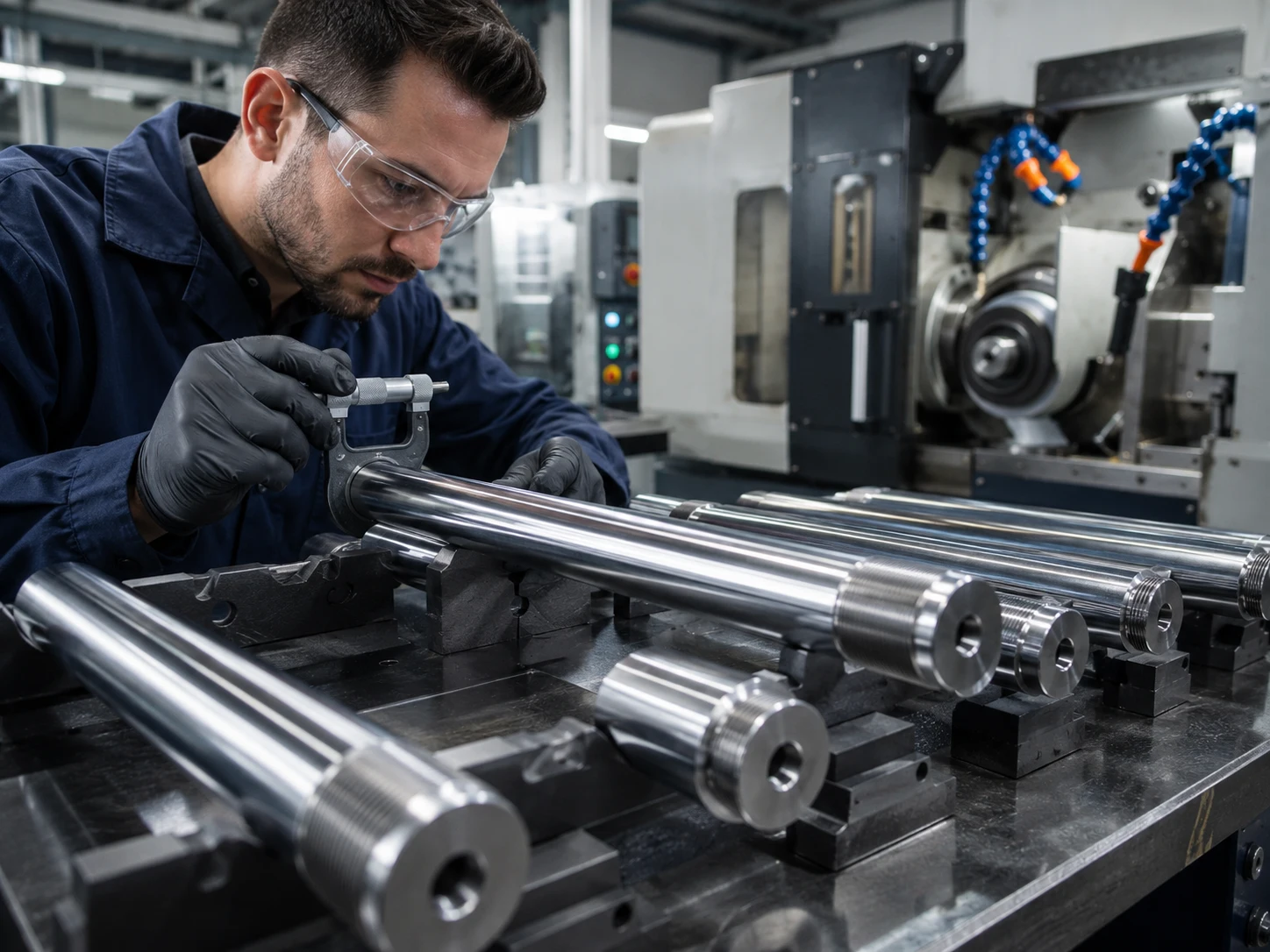
The piston rod of a hydraulic cylinder is characterized by precision, durability and surface quality. This affects the efficiency of the hydraulic cylinder, in operation. All stages of development, from selection of raw materials to assembly
Types of Hydraulic Cylinder Piston Rod
The piston rods of hydraulic cylinders can be very different. Generally, there are the standard carbon steel rod for for the application in aggressive environment or for the marine application. Also hollow-rod and double-ended- the normal industrial application, the induction-hardened rod for very heavy application and the stainless-steel rod influences the mechanical characteristics of the hydraulic cylinder and its life.
Selection of Raw Materials for Piston Rods
Quality of a piston rod is determined primarily by the choice of material for the piston rod. The materialThe as well as its mechanical strength.
Common Materials Used in Manufacturing
Typically manufacturers choose materials based on working pressure, exposure to environment and application requirements.
- Medium carbon steel offers a balance between strength and machinability, making it ideal for standard hydraulic cylinders.
- Alloy steels like 42CrMo4 provide enhanced tensile strength and fatigue resistance for high-pressure systems.
- Stainless steel is preferred where corrosion resistance is critical, such as in offshore or food-processing equipment.
The table below summarizes typical material choices:
| Material Type | Key Properties | Typical Applications |
| Medium Carbon Steel | Good machinability, moderate strength | Industrial machinery |
| Alloy Steel | High tensile strength, fatigue resistance | Heavy-duty hydraulics |
| Stainless Steel | Corrosion-resistant, durable | Marine & outdoor systems |
Material Preparation and Inspection Standards
Before machining begins, raw bars undergo strict testing. Chemical composition analysis ensures alloy consistency across batches. Ultrasonic inspection detects internal flaws like cracks or inclusions that could compromise structural integrity later in service. Compliance with ISO 9001 or DIN EN standards ensures dimensional uniformity and traceable quality control from supplier to production floor.
Machining Process of Hydraulic Cylinder Piston Rods
After
Turning and Centerless Grinding Operations
In the Turning process, we give the piston rod the required diameters and precise straightness in microns. Following this, in the centerless grinding process we refine the surface quality of the rod. The quality of the seal that will be fitted to the rod is entirely dependent on the surface quality and the resulting micro-level roughness values (Ra ≤ 0.2 µm).
Threading, Grooving, and End Machining Techniques
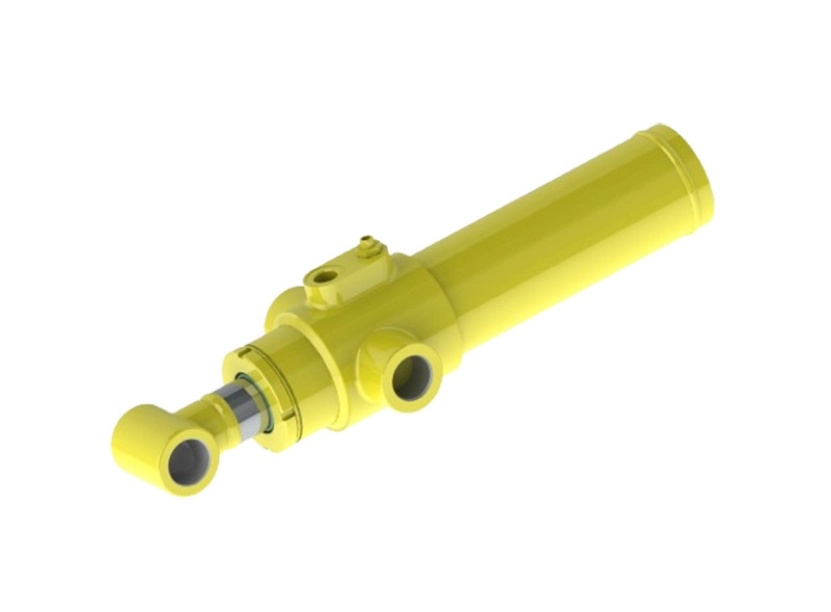
The threads on our rods are cut to precise lengths on one or both ends to fit into pistons or application. The rods are cut on CNC-controlled lathes for precise repeatability in high volume clevises. Additionally, we machine in grooves for retaining rings and seals, depending on the production runs. The tooling is set up to minimize wear, which in turn minimizes variation in the cutting process.
Surface Treatment and Hard Chrome Plating
Surface enhancement processes measure the extent to which piston rods are resistant to wear, corrosion and to friction losses.
Surface Hardening and Polishing Procedures
Induction hardening is used to locally increase the wear resistance of high stressed parts without negatively affecting the core irregularities of the surface, which could damage seals or increase wear. The polished part gets a mirror ductility. After the heat treatment, the work pieces are multi-stage polished in order to remove smallest-like surface which is optically highly effective and on the other hand does not disturb the oil film in the hydraulic cylinder as much as rougher surfaces do.
Chrome Plating Process for Corrosion Resistance
Hard electrolytic deposition method. We can apply a hard chrome layer of about 20-30 microns in chrome plating is still the best protection against rust and wear for a long time. By using the a uniform way. This layer is very hard and has the same properties over the entire surface. After. We control the surface roughness after grinding to the required specifications. the plating process we grind the part back to exact dimensions that were lost during the coating build up
Quality Control in Piston Rod Production
Our inspection of the completed rods is thorough and ensures that the completed rods meet our internal tolerances as well as any customer specification.
Dimensional Inspection and Tolerance Verification
A Coordinate Measuring Machine (CMM) can perform geometric verification on parameters such as straightness, roundness, concentricity and diameter tolerance. By checking production at various points using multiple checkpoints it is possible to identify deviation trends and use Statistical Process Control (SPC) to make adjustments as necessary in real time.
Surface Integrity and Coating Evaluation Tests
Surface roughness is measured using profilometers to check surface roughness on the required level as stipulated in the engineering drawing by means of the target value of Ra value. Chrome bonding strength of adhesion test is checked under cyclic loading until it detaches. Salt spray testing simulates long-term exposure to corrosive environments—critical for applications where moisture or chemicals are present continuously.
Assembly Readiness and Final Processing Steps
Once quality approval is complete, preparation shifts toward ensuring safe handling and integration efficiency.
Cleaning, Packaging, and Protection Measures
After the machining and polishing process every rod is cleaned by ultrasonic or by a solvent to remove oil. In storage or during transport every surface is protected by a thin layer of rust inhibitor. Piston rods are matched with their respective barrels, seals, bearings, and end caps on the Shining Hydraulic’s assembly line before the installation is checked.
All the parts are equipped with traceability tags. From the raw material batch to the traceability records of the individual parts’ machining and the end of the assembly process, the accountability of all production steps is guaranteed.
Piston Rod Manufacturing at Shining Hydraulic
Innovation drives efficiency improvements throughout modern manufacturing facilities like those operated by Shining Hydraulic. For example, CNC machining centers in many factories are now operated by computer alone and are able to cut and shape metal with high accuracy to microns while producing parts with complex geometries and features such as threaded ends and transition tapers.
Piston rod technology for hydraulic cylinders continues to evolve towards automation, environmentally friendly processing and precise dimensions. Industries worldwide depend on powerful and reliable motion systems to run their businesses on a daily basis.
FAQs
Q1: What are the best materials for the piston rod of a hydraulic cylinder?
For general applications medium carbon steel is most common. For higher pressure applications alloy steels are preferred. For corrosive applications like marine environments stainless steel is recommended.
Q2: Why chrome plating the piston rod?
Chrome plating the piston rod provides for corrosion resistance and increases surface hardness to withstand abrasive wear during cyclic usage in hydraulic cylinders.
Q3: How is straightness maintained during machining?
Precision turning followed by centerless grinding keeps deviation within micrometer-level tolerances verified by laser alignment systems.
Q4: What tests ensure coating durability?
To test the durability of a coating by checking the adhesion of the coating under load as well as in a salt spray test in order to check the long term adhesion of chrome coatings.
Q5: How do manufacturers improve sustainability in production?
They adopt eco-friendly plating technologies, energy-efficient heat treatments, and lean workflow systems to minimize waste while maintaining product quality.


